

 Impressionism
 71.0 x 91.0 cm
Impressions giclées ou sur toile de qualité musée, avec une production rapide et des finitions au choix. ( Commander la reproduction peinte à la main Télécharger l'image haute résolution)
Choisissez parmi nos formats prédéfinis qui respectent les proportions originales de l’œuvre.

Vous pouvez saisir vos propres dimensions pour vous adapter à un cadre ou à un espace spécifique. Si la taille sélectionnée ne correspond pas aux proportions de l'image originale, nous recadrerons l'œuvre ou étendrons l'image avec une bordure en miroir ou une couleur unie. Une maquette numérique vous sera envoyée pour approbation avant le début de la production.
Veuillez noter que l'aperçu à l'écran ne reflète pas le recadrage ou l'extension réelle. Seule la maquette montrera avec précision la composition finale.
Bien que des tailles personnalisées soient disponibles, nous vous recommandons de choisir une dimension dans la liste prédéfinie afin de préserver les proportions originales.
Livraison dans le monde entier () en 2 semaines au lieu des 4/5 semaines habituelles. (16 août)


The Mill
Format de la reproduction
Born in Sydney, Australia, in 1856, George Grosvenor Thomas’s artistic journey took a dramatic turn when he emigrated to the United Kingdom in 1885. Driven by a desire for greater opportunities within the art world, he settled in Glasgow, a city already burgeoning with artistic innovation and profoundly influenced by the Barbizon School of painting. This pivotal move marked the beginning of a career dedicated to capturing the beauty of the British countryside – particularly its landscapes and still lifes – through a distinctly Impressionistic lens.
Thomas’s early years in Glasgow were shaped by his association with the Glasgow Boys, a group of young artists who challenged the established artistic conventions of the time. While not formally part of their core circle, he was deeply influenced by their spirit of experimentation and their embrace of contemporary techniques. This exposure to new ideas, combined with his own innate talent, propelled him towards a unique style characterized by loose brushwork, vibrant colors, and an emphasis on capturing fleeting moments of light and atmosphere. He quickly mastered both oil painting and watercolor, demonstrating versatility in his chosen mediums.
Thomas’s artistic development was profoundly shaped by a diverse range of influences. The Barbizon School, with its focus on plein air painting and the depiction of rural life, provided a foundational understanding of landscape representation. He also drew inspiration from the works of Jean-Baptiste-Camille Corot and Charles-François Daubigny, both masters of capturing atmospheric effects and employing broken color techniques to create a sense of luminosity. His brushwork was often characterized by short, expressive strokes applied with rapid succession, allowing him to quickly convey the essence of a scene – the dappled sunlight filtering through trees, the shimmering surface of water, or the subtle shifts in color caused by changing light conditions.
He meticulously observed nature, studying how light interacted with different surfaces and materials. This dedication to realism is evident in his detailed renderings of foliage, rocks, and water, but always tempered by an Impressionistic sensibility. His use of complementary colors – blues and oranges, greens and reds – created a vibrant and dynamic effect, while his skillful handling of atmospheric perspective conveyed the depth and scale of the landscapes he depicted.
While primarily known for his landscape paintings, Thomas’s oeuvre encompassed a surprisingly diverse range of subjects. He frequently painted rural scenes – farms, fields, and woodlands – but also explored urban settings, capturing the bustle of city life and the quiet intimacy of domestic interiors. He was equally adept at creating still lifes, arranging flowers and fruit in carefully considered compositions that celebrated their beauty and transience. His work appeared regularly in prestigious exhibitions across Britain and on the continent, including those held by the Royal Academy, Royal Scottish Academy, and Royal Scottish Society of Painters in Watercolour.
His travels to Munich and Dresden resulted in gold medals recognizing his artistic merit, solidifying his reputation as a skilled and accomplished painter. He maintained connections with the Glasgow Boys throughout his career, continuing to exchange ideas and influence each other’s work.
George Grosvenor Thomas died in London in 1923, leaving behind a substantial body of work that continues to be admired for its beauty, sensitivity, and technical skill. His paintings offer a captivating glimpse into the landscapes and lives of Victorian Britain, capturing both the grandeur of nature and the quiet dignity of everyday life. Today, his works are held in prominent collections around the world, including the Glasgow, Budapest, and Weimar Art Galleries, ensuring that his artistic legacy endures.

1856 - 1923
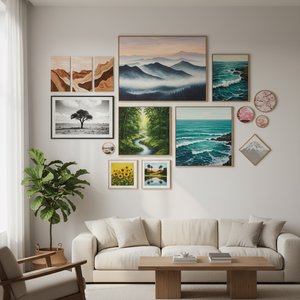
Découvrez les 10 plus beaux paysages de l'histoire de l'art : Monet, Van Gogh et bien d'autres. Explorez leur technique unique et trouvez l'inspiration pour votre décoration intérieure avec BuyPopArt.com. Œuvres exceptionnelles à découvrir !

Plongez au cœur de l'Impressionnisme avec les 10 chefs-d'œuvre qui ont révolutionné le paysage. Découvrez Monet, Renoir et plus encore sur BuyPopArt.com – reproductions d'art de qualité muséale pour sublimer votre intérieur.
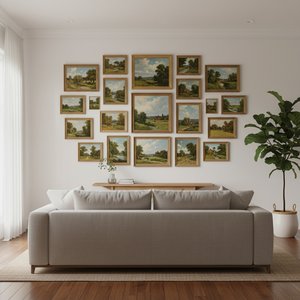
Plongez dans l'univers de John Constable avec les 25 œuvres incontournables du maître anglais. Découvrez l'histoire, la technique et l'émotion derrière ses paysages romantiques. Reproductions de qualité muséale sur BuyPopArt.com.

Immerse yourself in the luminous world of Impressionist landscapes. Discover how masters like Monet and Gauguin captured ephemeral light through plein air painting, and learn to bring the soul of sun-drenched meadows into your home with exquisite, hand-painted oil reproductions.

Explore the profound legacy of the Hudson River School. Discover how masters like Thomas Cole captured the American sublime through Romanticism and Luminism. A definitive guide for art historians and collectors seeking to understand America's wild beauty.


Restez informé(e) des dernières actualités artistiques, des offres exclusives et des idées de décoration.
Parlez-nous de votre projet et nos experts en art vous proposeront 3 suggestions d'œuvres personnalisées.
Laissez-nous sélectionner 3 œuvres rien que pour vous – Gratuit !


 Aperçu en situation
 Envoyer
 Partager
 Détails de l'œuvre

 Télécharger
 Articles similaires
 Radiographie
 Diaporama
 Lire la suite




































 L'option verre n'est disponible que pour les dimensions inférieures à 110 cm.


