

Impressions giclées ou sur toile de qualité musée, avec une production rapide et des finitions au choix. ( Acheter la peinture faite à la main Acheter l'image)





























Choisissez parmi nos formats prédéfinis qui respectent les proportions originales de l’œuvre.

Vous pouvez saisir vos propres dimensions pour vous adapter à un cadre ou à un espace spécifique. Si la taille sélectionnée ne correspond pas aux proportions de l'image originale, nous recadrerons l'œuvre ou étendrons l'image avec une bordure en miroir ou une couleur unie. Une maquette numérique vous sera envoyée pour approbation avant le début de la production.
Veuillez noter que l'aperçu à l'écran ne reflète pas le recadrage ou l'extension réelle. Seule la maquette montrera avec précision la composition finale.
Bien que des tailles personnalisées soient disponibles, nous vous recommandons de choisir une dimension dans la liste prédéfinie afin de préserver les proportions originales.
Livraison dans le monde entier () en 2 semaines au lieu des 4/5 semaines habituelles. (24 août)


Noah Webster
Format de la reproduction
James Vernon Herring’s “Noah Webster” (1833) offers more than just a likeness; it's a potent visual statement about the burgeoning identity of the United States and the revolutionary power of language. The painting captures Noah Webster, the architect of American English, in a moment of quiet contemplation, seated comfortably amidst a landscape of knowledge – a deliberate arrangement that speaks volumes about his intellectual pursuits and the nation’s aspirations.
James Vernon Herring’s artistic journey is inextricably linked to his commitment to fostering opportunities for African American artists during a period of profound social and racial inequality. Born in Clio, South Carolina, Herring’s unique familial background – a union between a Black mother and a white Jewish father – profoundly shaped his worldview and fueled his dedication to representation. His time at Howard University was pivotal, not just as a teacher but as a catalyst for transforming the institution's artistic identity. This painting reflects that influence—a conscious effort to elevate voices and perspectives often marginalized within the American art landscape.
Herring’s style is characterized by a meticulous realism, evident in the detailed rendering of Webster’s features and clothing. The use of light and shadow creates a sense of depth and volume, lending a tangible quality to the portrait. His brushwork is precise yet expressive, conveying both intellectual seriousness and a subtle warmth. The color palette – dominated by earth tones with touches of green – contributes to the painting's overall atmosphere of scholarly contemplation.
"Noah Webster: A Portrait of American Linguistic Innovation" transcends a simple likeness; it's a symbolic representation of the nation's intellectual ambitions. The books surrounding Webster represent the vastness of knowledge he sought to codify, while his posture embodies determination and foresight. The painting evokes a sense of quiet confidence and intellectual pride – qualities that defined Webster’s legacy and continue to resonate in the American lexicon today. It stands as a testament to Herring's ability to capture not just a subject's appearance but also their spirit and contribution to the nation’s cultural identity.
James Vernon Herring (1887-1969) s'impose comme une figure charnière du paysage artistique américain, notamment par son rôle crucial dans la promotion des artistes afro-américains à une époque marquée par l'exclusion systémique. Né à Clio, en Caroline du Sud, d’une mère noire et d’un père juif blanc — une configuration familiale unique qui a façonné sa perspective — le parcours de Herring, d'une petite ville rurale à la notoriété au sein du monde de l'art de Washington D.C., témoigne d'une résilience, d'une vision et d'un engagement inébranlable envers la représentation artistique. Sa vie fut inextricablement liée à l'Université Howard, où il n'a pas seulement enseigné, mais a fondamentalement remodelé l'identité artistique de cette institution, laissant derrière lui un héritage qui continue d'inspirer les générations d'artistes et de chercheurs.
La formation initiale de Herring s'est déroulée dans le Sud ségrégationniste, un environnement qui a simultanément nourri sa créativité et instillé en lui une profonde conscience des injustices raciales. Reconnaissant les limites imposées par les barrières sociales, sa famille l'a installé à Washington D.C., lui offrant ainsi l'accès à des opportunités éducatives indisponibles dans sa ville natale. Il a commencé sa formation artistique formelle à l'Université de Syracuse, suivie d'études à Columbia et à Harvard, où il a perfectionné ses compétences techniques et développé une appréciation pour une grande diversité de styles artistiques. De manière cruciale, l'exposition de Herring au mouvement impressionniste français a profondément influencé sa manière de capturer la lumière, la couleur et les instants fugaces de la nature — une technique qui allait devenir la marque de fabrique de son œuvre.
Bien que ses fondations techniques soient ancrées dans les traditions lumineuses de l'impressionnisme, la véritable passion de Herring résidait dans la réappropriation du récit noir à travers le portrait et la représentation historique. Il a reconnu la beauté inhérente et la richesse culturelle de l'art afro-américain — souvent marginalisé et négligé durant cette ère — y voyant un élément essentiel à une compréhension complète de l'expérience américaine. Son travail cherchait souvent à jeter un pont entre les techniques classiques européennes et les histoires profondes, et souvent méconnues, de son peuple.
Dans ses portraits magistraux, tels que sa représentation évocatrice de Noah Webster, Herring démontre une capacité à placer des figures historiques dans des cadres érudits et dignes. Cette œuvre spécifique capture le lexicographe américain au cœur d'une atmosphère intellectuelle, illustrant un moment charnière pour la langue et l'éducation. À travers de tels ouvrages, Herring ne s'est pas contenté de peindre des visages ; il a peint la dignité, l'intellect et l'esprit durable de l'excellence noire. Son coup de pinceau, caractérisé par une maîtrise de la lumière et de l'ombre, lui permettait d'insuffler la vie à ses sujets, les rendant à la fois intemporels et immédiats.
Au-delà de ses contributions individuelles sur la toile, l'impact le plus durable de Herring se trouve dans son rôle d'éducateur et de bâtisseur d'institutions. Son engagement à favoriser les talents a joué un rôle déterminant dans la fondation du département d'art de l'Université Howard. Grâce à cette plateforme, il a créé un sanctuaire permettant aux artistes noirs de développer leur propre voix, sans les contraintes étouffantes des préjugés raciaux qui dominaient une grande partie du monde de l'art contemporain. Il ne se contentait pas d'enseigner la technique ; il cultivait un environnement où l'identité et l'art pouvaient coexister et s'épanouir.
Son influence s'est étendue à la communauté au sens large par son engagement auprès des galeries et des mouvements cherchant à élever l'art noir, notamment via ses liens avec l'ère de la Barnett-Aden Gallery. L'importance de l'œuvre de sa vie peut se résumer en plusieurs piliers fondamentaux :
James Vernon Herring demeure un phare de ce qui est possible lorsque la brillance technique rencontre une mission sociale. Sa vie fut un dialogue continu entre la beauté du monde naturel et la nécessité de la vérité sociale, garantissant que la lumière qu'il a capturée sur la toile continue d'éclairer le chemin de tous ceux qui lui ont succédé.

1887 - 1969 , États-Unis
Plongez dans l'univers de James Abbott McNeill Whistler : découvrez ses 25 œuvres les plus emblématiques, des nocturnes aux portraits saisissants. Explorez son esthétisme unique et trouvez l'inspiration déco avec BuyPopArt.com.

Explore the captivating world of Herman Armour Webster, an American Impressionist master. Discover his Parisian influences, unique style, and lasting legacy with BuyPopArt.

Plongez dans l'univers vibrant d'Alfred Munnings ! Découvrez les 25 œuvres maîtresses du peintre anglais, icônes de l'art équestre et de l'impressionnisme britannique. Tableaux de chevaux, paysages idylliques… Trouvez votre inspiration déco sur BuyPopArt.com.

Explore the captivating portraits of James Otto Lewis, a pivotal figure bridging 19th-century realism & American Modernism. Discover his groundbreaking work documenting Native American culture and regional identity.

Explore the world of Grant Wood & American Regionalism with BuyPopArt. Discover the symbolism behind 'American Gothic', recurring themes, and the movement's lasting impact on art history. High-quality reproductions available.


Restez informé(e) des dernières actualités artistiques, des offres exclusives et des idées de décoration.
Parlez-nous de votre projet et nos experts en art vous proposeront 3 suggestions d'œuvres personnalisées.
Laissez-nous sélectionner 3 œuvres rien que pour vous – Gratuit !


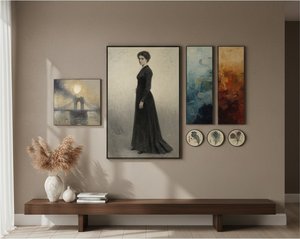
 Aperçu en situation
 Partager
 Partager
 Détails

 Télécharger l'image
 Articles similaires
 Radiographie
 Voir le diaporama


 Afficher la suite







 L'option verre n'est disponible que pour les dimensions inférieures à 110 cm.


