

Huile sur toile peinte à la main, avec cadre et dimensions personnalisés, réalisée sur commande par nos artistes. ( Acheter l'impression Acheter l'image)





























Choisissez parmi nos formats prédéfinis qui respectent les proportions originales de l’œuvre.

Vous pouvez saisir vos propres dimensions pour l'adapter à un cadre ou à un espace spécifique. Si la taille sélectionnée ne correspond pas aux proportions de l'image d'origine, nous recadrerons l'œuvre ou prolongerons la peinture avec des éléments peints à la main supplémentaires. Une maquette numérique vous sera envoyée pour approbation avant le début de la production.
Veuillez noter que l'aperçu à l'écran ne reflète pas le recadrage ou l'extension réels. Seule la maquette montrera fidèlement la composition finale.
Bien que des tailles personnalisées soient disponibles, nous vous recommandons de sélectionner une dimension dans la liste prédéfinie afin de préserver les proportions d'origine.
Livraison dans le monde entier () en 3 à 4 semaines au lieu des 5 semaines habituelles. (13 août). Aucun compromis sur la qualité.


Faith
Format de la reproduction
John Phillip’s “Faith,” painted in 1864, isn't merely a portrait; it’s a carefully constructed tableau of piety and domestic tranquility, steeped in the cultural currents of late Victorian Scotland. The painting depicts a woman, likely a member of the Scottish upper-middle class, enveloped in a quiet moment of prayer or contemplation. Her posture is graceful yet grounded, her hands clasped gently before her chest – a gesture universally understood as signifying reverence. The muted palette—dominated by earthy browns, soft greens, and subtle blues—evokes a sense of warmth and domesticity, while the carefully rendered fabrics and modest jewelry speak to a life of quiet dignity. Beyond the immediate subject, the inclusion of two figures on either side adds layers of narrative; one appears to be reading, perhaps offering guidance or support, while the other seems absorbed in conversation, suggesting a community bound by shared faith.
Phillip’s style is deeply rooted in the artistic traditions he studied at the Royal Academy and, crucially, his association with the influential “Clique” of Victorian artists. This group, led by Richard Dadd, championed the works of William Hogarth and David Wilkie, seeking to capture the spirit of realism and dramatic storytelling. However, Phillip’s work transcends mere imitation; he infused these influences with a distinctly Scottish sensibility, evident in his meticulous attention to detail—the texture of the woman's shawl, the subtle play of light on her face, the architectural backdrop hinting at a modest church. The composition itself is carefully balanced, drawing the eye inward towards the central figure and creating a sense of intimate serenity.
It’s important to understand that “Faith” emerged from John Phillip's transformative journey to Spain in 1851. He was deeply moved by the religious fervor he witnessed there, particularly within the Catholic communities. This experience profoundly altered his artistic perspective, leading him to dedicate much of his later work to depicting Spanish life and culture – a period that earned him the affectionate moniker “Spanish Phillip.” The painting reflects this newfound inspiration; the subtle warmth of the lighting, reminiscent of the Spanish sun, and the overall atmosphere of quiet devotion are hallmarks of his Spanish-influenced style. The inclusion of elements like the rosary beads and the implied presence of a church subtly allude to the religious context of the scene.
Phillip’s background as a member of the Clique also shaped his artistic approach. The group's admiration for Hogarth, known for his satirical social commentary, is evident in the painting’s ability to subtly convey a sense of moral virtue and domestic harmony. However, Phillip’s work goes beyond mere social critique; it offers a poignant glimpse into the private world of faith—a realm of quiet contemplation and spiritual connection.
The symbolism within “Faith” is both subtle and profound. The woman's closed eyes suggest a deep level of concentration, inviting the viewer to share in her moment of prayer or reflection. The simple setting—a modestly furnished room—underscores the importance of faith as an internal experience rather than an outward display of wealth or status. The two figures flanking the central subject represent the community that supports and nurtures this individual’s spiritual journey, highlighting the interconnectedness of faith within a domestic sphere.
More broadly, “Faith” speaks to the enduring human need for connection—to God, to family, and to one another. The painting's quiet dignity and serene atmosphere evoke a sense of peace and tranquility, offering a respite from the complexities of modern life. It’s a testament to the power of faith to provide solace, guidance, and a profound sense of belonging.
Reproducing “Faith” in high quality offers a beautiful way to bring this evocative Victorian painting into your home or office. The meticulous detail and rich colors of the original are faithfully captured in our hand-painted reproductions, ensuring that you experience the full emotional impact of Phillip’s masterpiece. Whether displayed as a statement piece in a living room or a calming addition to a study, “Faith” will serve as a timeless reminder of the enduring power of devotion and human connection.
Né dans les paysages sauvages d'Aberdeen, en Écosse, en 1817, John Phillip allait finalement transcender ses humbles origines pour devenir l'une des voix les plus évocatrices de l'ère victorienne. Affectueusement surnommé "Spanish Phillip," son parcours fut celui d'une profonde transformation, passant des représentations méticuleuses et sombres de la vie rurale écossaise aux toiles vibrantes et baignées de soleil de l'Europe du Sud. Ses premières années furent marquées par un talent naissant qui attira l'attention de mécènes influents, notamment Lord Panmure, dont la générosité permit à Phillip d'intégrer la Royal Academy of Arts de Londres en 1836. C'est au sein de cette prestigieuse institution que Phillip trouva sa tribu artistique, rejoignant le groupe influent connu sous le nom de The Clique. Dirigé par l'excentrique Richard Dadd, ce cercle d'artistes partageait une profonde révérence pour le réalisme narratif de William Hogarth et les paysages dramatiques de David Wilkie, principes qui allaient constituer le socle de la maîtrise technique précoce de Phillip.
Durant ses années de formation, le pinceau de Phillip se consacra à la dignité et aux épreuves du peuple écossais. Il captura l'existence paisible, et souvent éprouvante, des petits exploitants avec une précision qui parlait à l'âme de sa patrie. Ces premières œuvres étaient caractérisées par une attention méticuleuse aux détails et un sentiment de piété domestique, reflétant les courants culturels de l'Écosse de la fin de l'époque victorienne. Cependant, un tournant décisif s'opéra en 1851, poussé par des conseils médicaux l'invitant à rechercher des climats plus chauds pour sa santé. Ce pèlerinage en Espagne ne fut pas seulement un voyage réparateur, mais une véritable renaissance artistique. En errant dans les rues de Séville et de Madrid, les ombres de l'Écosse furent remplacées par la lumière éclatante de l'Andalousie. L'influence des maîtres espagnols Bartolom Tamayo, Bartolomé Esteban Murillo et Diego Velázquez commença à imprégner son travail, altérant fondamentalement sa palette et son approche de la forme.
La transition entre le style détaillé, presque documentaire, de sa période écossaise et une technique beaucoup plus large et picturale marque l'évolution la plus fascinante de la carrière de Phillip. Bien qu'il ait initialement résisté au mouvement préraphaélite naissant, ses œuvres ultérieures, telles que The Letter Writer, Seville, commencèrent à manifester un engagement subtil envers leurs qualités lumineuses. À mesure que ses voyages approfondissaient son lien avec l'esprit espagnol, son coup de pinceau devint plus assuré et expressif, reflétant les développations de la fin de carrière de contemporains comme John Everett Millais. Il s'éloigna des contours rigides pour explorer la texture et l'atmosphère, utilisant l'impasto pour capturer la chaleur et la poussière du paysage espagnol.
Cette maturation stylistique atteignit son apogée dans les années 1860, où ses compositions devinrent plus grandioses et émotionnellement résonnantes. Sa capacité à tisser ensemble les éléments suivants a défini sa période de maturité :
Des chefs-d'œuvre tels que The Early Career of Murillo (1864) et La Gloria (1865) témoignent de cette période de maîtrise. Dans ces œuvres, Phillip ne se contentait pas de peindre des sujets ; il peignait l'histoire même de l'art, rendant hommage aux maîtres qui avaient inspiré sa propre métamorphose. Son héritage demeure celui d'un bâtisseur de ponts — entre les traditions sombres de la peinture de genre écossaise et le romantisme vibrant et lumineux de la Méditerranée. Bien que sa vie fut écourtée en 1867, John Phillip a laissé derrière lui une œuvre qui continue d'enchanter, invitant les spectateurs à sortir des brumes grises du Nord pour entrer dans l'éclat éternel et doré de ses rêves espagnols.

1817 - 1867 , Écosse
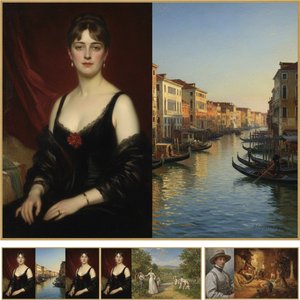
Plongez dans l'univers de John Singer Sargent : découvrez les 25 œuvres qui ont marqué l'histoire de l'art. Portraits impressionnants, réalisme exquis et couleurs vibrantes. Retrouvez ces chefs-d'œuvre en reproduction haute définition sur BuyPopArt.com.
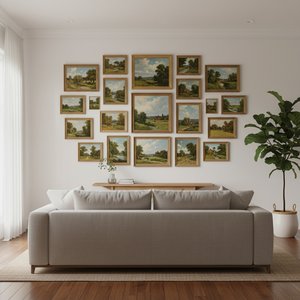
Plongez dans l'univers de John Constable avec les 25 œuvres incontournables du maître anglais. Découvrez l'histoire, la technique et l'émotion derrière ses paysages romantiques. Reproductions de qualité muséale sur BuyPopArt.com.
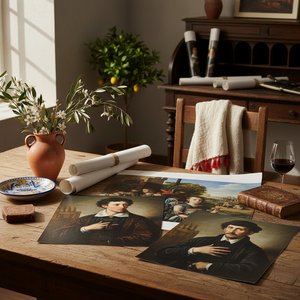
Plongez au cœur du Musée du Prado avec notre sélection des 25 œuvres incontournables : Velázquez, Goya, El Greco… Découvrez l'histoire et la beauté de ces chefs-d'œuvre baroques. Trouvez l'inspiration déco & achetez des reproductions haute qualité sur BuyPopArt.com !
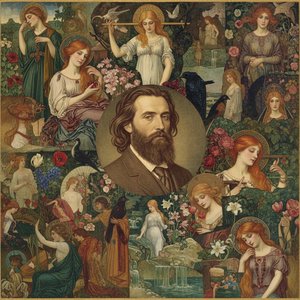
Plongez dans l'univers fascinant de Dante Gabriel Rossetti ! Découvrez les 25 œuvres majeures du préraphaélisme : symbolisme, poésie et beauté victorienne. Reproductions d'art exceptionnelles sur BuyPopArt.com.

Explore the dramatic world of Spanish Baroque art! Discover masters like Zurbarán & the powerful influence of religious zeal on painting techniques – a guide for collectors and enthusiasts.


Restez informé(e) des dernières actualités artistiques, des offres exclusives et des idées de décoration.
Parlez-nous de votre projet et nos experts en art vous proposeront 3 suggestions d'œuvres personnalisées.
Laissez-nous sélectionner 3 œuvres rien que pour vous – Gratuit !


 Aperçu en situation
 Envoyer
 Partager
 Détails de l'œuvre

 Télécharger
 Articles similaires
 Radiographie
 Diaporama


 Lire la suite







 L'option verre n'est disponible que pour les dimensions inférieures à 110 cm.


