Acrylique sur toileArt muralExpressionism
 1913
1913 107.0 x 120.0 cm
Impressions giclées ou sur toile de qualité musée, avec une production rapide et des finitions au choix. ( Commander la reproduction peinte à la main Télécharger l'image haute résolution)





























Choisissez parmi nos formats prédéfinis qui respectent les proportions originales de l’œuvre.

Vous pouvez saisir vos propres dimensions pour vous adapter à un cadre ou à un espace spécifique. Si la taille sélectionnée ne correspond pas aux proportions de l'image originale, nous recadrerons l'œuvre ou étendrons l'image avec une bordure en miroir ou une couleur unie. Une maquette numérique vous sera envoyée pour approbation avant le début de la production.
Veuillez noter que l'aperçu à l'écran ne reflète pas le recadrage ou l'extension réelle. Seule la maquette montrera avec précision la composition finale.
Bien que des tailles personnalisées soient disponibles, nous vous recommandons de choisir une dimension dans la liste prédéfinie afin de préserver les proportions originales.
Livraison dans le monde entier () en 2 semaines au lieu des 4/5 semaines habituelles. (13 août)


Burning House
Format de la reproduction
Marc Chagall’s “Burning House,” painted in 1913, is far more than a depiction of destruction; it’s a vibrant explosion of emotion and memory rendered with the artist’s signature expressive style. This captivating piece immediately draws the viewer into a scene brimming with symbolic weight – a house consumed by flames, a man riding a bicycle, cows grazing peacefully nearby, all bathed in Chagall's characteristic use of bold color and distorted forms.
The painting’s genesis lies within Chagall’s deeply personal connection to his childhood village of Liozna, located in Belarus. He often returned to this place in his memory, transforming it into a fantastical realm populated by recurring motifs: flying figures, animals imbued with symbolic meaning, and landscapes rendered with an almost dreamlike quality. “Burning House” is believed to be rooted in the destruction of his childhood home during World War I – a traumatic event that profoundly shaped his artistic vision and fueled his desire to capture fleeting moments of beauty and memory before they vanished forever.
Chagall’s technique in “Burning House” is quintessential Expressionism. He employs loose, gestural brushstrokes, prioritizing emotional impact over precise representation. The house itself isn't rendered with realistic detail; instead, it’s a swirling mass of color and form, conveying the chaotic energy of the fire. The use of intense reds, oranges, and yellows dominates the composition, amplifying the sense of urgency and danger. This deliberate distortion of reality is not an accident but a conscious choice to convey inner feelings rather than simply depicting an external scene.
Notice how the bicycle, a symbol of freedom and movement, cuts through the chaos, while the cows – often associated with peace and tranquility – stand as silent witnesses to the unfolding drama. These seemingly disparate elements contribute to the painting’s layered symbolism, inviting multiple interpretations.
The ladder extending from the right side of the canvas is a particularly poignant detail. It suggests an attempt at rescue, a desperate plea against the inevitable destruction. However, it also hints at futility – a recognition that some things are beyond our control. The presence of the two cows adds another layer to the narrative. They could represent innocence lost, or perhaps a connection to rural life and simpler times, contrasting sharply with the urban anxieties of the early 20th century.
Chagall’s masterful use of light and shadow further enhances the painting's dramatic effect, emphasizing the flickering flames and casting long, distorted shadows that heighten the sense of unease.
"Burning House" is a powerful example of Chagall’s ability to transform personal experience into universal themes – loss, memory, and the struggle against chaos. Painted during a period of immense social and political upheaval, it reflects the anxieties and uncertainties of the era while simultaneously offering a glimpse into the artist's deeply imaginative world. This reproduction captures not just an image but the very soul of Chagall’s vision, allowing you to experience the raw emotion and captivating beauty of this iconic work.
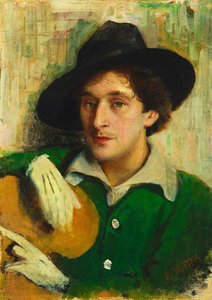
1887 - 1985 , Biélorussie

Plongez au cœur de l'univers poétique de Marc Chagall. Découvrez 25 œuvres emblématiques, explorant couleurs vibrantes, rêves éthérés et une émotion universelle. Reproductions d’art de qualité supérieure disponibles sur BuyPopArt.com. Explorez la collection !

Explore the rich symbolism of the red dress in art history! From ancient power displays to iconic portraits like Cézanne’s 'Madame Cezanne', discover the cultural and artistic significance behind this captivating color. Expert analysis & insights.
Plongez dans l'univers vibrant d'Henri Matisse ! Découvrez les 25 œuvres majeures du fauvisme et de la peinture moderne. Explorez La Danse, L'Atelier Rouge & plus encore. Reproductions de qualité musée sur BuyPopArt.com.

Plongez dans l'univers coloré de Paul Klee ! Découvrez les 25 œuvres maîtresses du peintre suisse, figures clés de l'art abstrait et du Bauhaus. Inspirez votre décoration intérieure avec BuyPopArt.com – reproductions de qualité muséale & collection exclusive.
Plongez dans l'univers émotionnel de Mark Rothko avec les 25 œuvres clés du maître de l'abstraction. Découvrez l'histoire, la technique et le pouvoir des couleurs de ces tableaux iconiques. Reproductions d'art de qualité musée sur BuyPopArt.com


Restez informé(e) des dernières actualités artistiques, des offres exclusives et des idées de décoration.
Parlez-nous de votre projet et nos experts en art vous proposeront 3 suggestions d'œuvres personnalisées.
Laissez-nous sélectionner 3 œuvres rien que pour vous – Gratuit !


 Aperçu en situation
 Envoyer
 Partager
 Détails de l'œuvre

 Télécharger
 Articles similaires
 Radiographie
 Diaporama
 Lire la suite







 L'option verre n'est disponible que pour les dimensions inférieures à 110 cm.