x

 Commander la reproduction Acheter l'image haute résolution
 Partager
 Détails de l'œuvre
 Ajouter aux favoris
 Télécharger
 Articles similaires
 Radiographie
 Diaporama
 AcrylicWallArtPrimitive Surrealism
 1956
1956 47.0 x 63.0 cm
Impression giclée ou sur toile de qualité musée, avec une production rapide et des finitions au choix.





























Choisissez parmi nos formats prédéfinis qui respectent les proportions originales de l’œuvre.

Vous pouvez saisir vos propres dimensions pour vous adapter à un cadre ou à un espace spécifique. Si la taille sélectionnée ne correspond pas aux proportions de l'image originale, nous recadrerons l'œuvre ou étendrons l'image avec une bordure en miroir ou une couleur unie. Une maquette numérique vous sera envoyée pour approbation avant le début de la production.
Veuillez noter que l'aperçu à l'écran ne reflète pas le recadrage ou l'extension réelle. Seule la maquette montrera avec précision la composition finale.
Bien que des tailles personnalisées soient disponibles, nous vous recommandons de choisir une dimension dans la liste prédéfinie afin de préserver les proportions originales.
Livraison dans le monde entier () en 2 semaines au lieu des 4/5 semaines habituelles. (20 juillet)


David
Format de reproduction
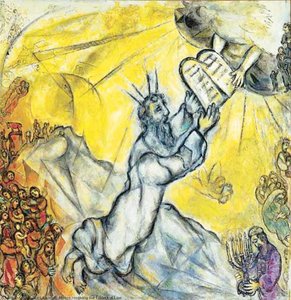
Marc Chagall’s “David,” painted in 1956, isn't merely a depiction of biblical grandeur; it’s an embodiment of Chagall’s lifelong preoccupation with dreams and recollections—a visual distillation of Vitebsk itself. The painting captures a solitary blue bird perched atop a branch laden with verdant leaves, its gaze directed towards the viewer, establishing an immediate connection between the natural world and the contemplative spirit.
Chagall's artistic approach aligns powerfully with the tenets of naive art, or primitivism. Rejecting academic conventions and striving for an unfiltered expression of emotion, he eschewed meticulous realism in favor of a stylized visual language characterized by flattened perspectives and simplified forms. The vibrant color palette—dominantly blues and greens—is applied with loose, expressive brushstrokes that convey movement and spontaneity. These techniques prioritize feeling over precise representation, mirroring the artist’s own internal landscape.
“David” is inextricably linked to Chagall’s formative years in Vitebsk, Belarus—a town steeped in the traditions of both Russian Orthodox Christianity and Hasidic Judaism. This duality profoundly shaped his artistic vision, informing his recurring motifs of flying figures, representing aspiration and transcendence, alongside depictions of animals imbued with spiritual significance. The artist's engagement with Jewish folklore reflects a desire to preserve cultural memory amidst the upheavals of the Soviet era.
The central figure—the blue bird—serves as a potent symbol of hope and spiritual renewal. Its posture suggests contemplation and observation, inviting the viewer to share in Chagall’s meditative gaze. The branch and leaves represent stability and connection to nature, anchoring the bird's symbolic journey within a familiar earthly realm. These elements coalesce into a harmonious composition that speaks to themes of innocence, faith, and the enduring power of imagination.
"David" encapsulates the essence of Chagall's artistic philosophy—a commitment to conveying profound emotional truths through a deceptively simple visual language. The painting exudes a dreamlike atmosphere, transporting the viewer into Chagall’s inner world where logic yields to intuition and memory reigns supreme. Ultimately, it stands as a testament to his ability to distill complex spiritual ideas into evocative imagery, securing its place among the most cherished works of 20th-century art.
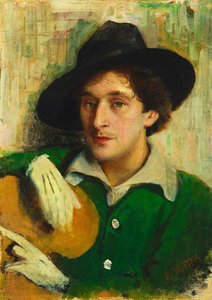
1887 - 1985 , Biélorussie

Plongez dans l'effervescence des Années Folles ! Découvrez 10 œuvres iconiques de Tamara de Lempicka, Klimt & Hopper. L'Art Déco, le modernisme et les couleurs vibrantes à redécouvrir. Reproductions d'art exceptionnelles sur BuyPopArt.com

Plongez dans l'univers de l'art moderne avec BuyPopArt.com ! Découvrez 10 œuvres iconiques de Kandinsky, Picasso et Van Gogh. Inspirez votre décoration intérieure avec des reproductions de tableaux impressionnistes, abstraits et expressionnistes. Explorez la collection complète en ligne.

Guide expert pour accorder vos reproductions d'art à votre intérieur ! Découvrez comment choisir les styles, couleurs et cadres parfaits pour une décoration harmonieuse et personnalisée. Qualité muséale garantie.

Plongez dans l'âme industrielle de 10 chefs-d'œuvre emblématiques ! Découvrez les histoires fascinantes de Van Gogh, Monet et d'autres artistes ayant capturé la beauté brute du monde moderne. Reproductions de qualité musée sur BuyPopArt.com – Explorez la collection en ligne.
Plongez dans l'univers de Katsushika Hokusai avec les 25 œuvres incontournables du maître japonais. Découvrez l'histoire, les techniques d'ukiyo-e et la beauté intemporelle de 'La Grande Vague'. Reproductions tableaux de qualité muséale sur BuyPopArt.com.


Restez informé(e) des dernières actualités artistiques, des offres exclusives et des idées de décoration.
Parlez-nous de votre projet et nos experts en art vous proposeront 3 suggestions d'œuvres personnalisées.
Laissez-nous sélectionner 3 œuvres rien que pour vous – Gratuit !


 Partager

 Afficher la suite







 L'option verre n'est disponible que pour les dimensions inférieures à 110 cm.