

Acquérez une image numérique haute résolution et optimisée, d'une qualité bien supérieure à l'aperçu en ligne.
Chaque fichier est méticuleusement préparé par nos spécialistes internes à l'aide d'outils avancés et d'une retouche manuelle experte. Nous garantissons que chaque image possède une clarté exceptionnelle, une précision des couleurs irréprochable et un niveau de détail fin.
Le fichier final est livré par e-mail sous 72 heures, optimisé pour une utilisation immédiate dans des contextes professionnels, éditoriaux et d'impression. Il offre la même qualité de confiance que celle utilisée par les plus grands studios de création, éditeurs et galeries.
Téléchargez un fichier haute résolution pour votre usage personnel, l'impression et vos projets créatifs. ( Commander l'impression Commander la reproduction peinte à la main)
En choisissant BuyPopArt.com, vous n'obtenez pas seulement une simple image : vous recevez une œuvre numérique sublimée avec professionnalisme, conçue avec précision et accompagnée d'une garantie de satisfaction. Voici tout ce qui accompagne automatiquement votre commande :

Votre fichier d'image numérique haute résolution vous sera envoyé par e-mail sous 72 heures après votre commande — prêt à un usage immédiat.

Votre œuvre d'art bénéficie d'une optimisation professionnelle grâce à des outils d'IA avancés et une retouche manuelle, garantissant un niveau maximal de détail, de clarté et de fidélité chromatique.

Vous avez accidentellement supprimé ou perdu votre fichier ? Pas d'inquiétude — nous vous le renverrons gratuitement, quand vous le souhaitez.

Profitez de votre œuvre d'art instantanément sans frais de douane ni de livraison — les téléchargements numériques sont toujours exonérés de taxes.

Nous garantissons que votre image numérique reproduit les couleurs de l'original aussi fidèlement que possible grâce à des outils professionnels et une gestion rigoureuse des couleurs.

Si vous n'êtes pas satisfait de votre image numérique, nous la retoucherons ou vous rembourserons 100% sous 60 jours — sans poser de questions.

Pas satisfait ? Obtenez un remboursement intégral dans les 60 jours suivant la réception de votre fichier numérique — sans aucune question posée.

Achetez 3 images, économisez 10% - Achetez 5, économisez 15% - Achetez 10+, économisez 20%. Idéal pour les projets créatifs, les galeries et les agences.
Max Ernst's “Untitled (3407)” isn’t merely a depiction of a damaged boat; it’s a meticulously constructed tableau of psychological unease and fractured reality. The image, rendered in a style deeply rooted in Surrealism, immediately arrests the viewer with its stark simplicity and unsettling core: a solitary wooden vessel riddled with a gaping hole in its center. This isn't a scene of dramatic action or immediate danger; instead, it’s imbued with a profound sense of isolation, decay, and the inherent instability of perception. The muted palette – primarily reds and browns – contributes to this atmosphere of melancholic stillness, while the background hints at other vessels, suggesting a wider, equally desolate landscape.
Ernst, born in Brühl, Germany, in 1891, was a restless intellectual and artist who deliberately rejected traditional artistic training. His journey began with philosophical inquiry, fueled by a fascination with psychology and psychiatry – disciplines he studied rigorously at the University of Bonn. This academic grounding profoundly shaped his approach to art, moving beyond mere representation towards an exploration of the subconscious mind and the illogical structures of dreams. His early experiences during World War I, marked by trauma and disillusionment, undoubtedly informed this preoccupation with fractured realities and the unsettling nature of existence – themes that resonate powerfully within “Untitled (3407).”
The painting’s distinctive quality stems largely from Ernst's innovative techniques, most notably *frottage*. This method, developed by Ernst himself, involved rubbing a pencil over textured surfaces – wood grain, fabric, or even the pages of books – to create seemingly random patterns. These patterns were then incorporated into his compositions, adding layers of hidden imagery and suggestive symbolism. In “Untitled (3407),” traces of this technique are subtly present, contributing to the painting’s dreamlike quality and hinting at a deeper, unseen narrative.
Furthermore, Ernst frequently employed *grattage*, scraping paint across the canvas to reveal the textures beneath – often creating layered images that defy easy interpretation. This process mirrors the disruption of the boat's structure, visually representing the breakdown of order and the emergence of unexpected forms. The deliberate roughness and unevenness of the surface further enhance the painting’s unsettling effect, inviting viewers to contemplate the fragility of form and the inherent ambiguity of visual experience.
The central image of the damaged boat is rich in symbolic potential. It can be interpreted as a representation of vulnerability, loss, or perhaps even the human condition itself – susceptible to damage, adrift without direction, and bearing the scars of past experiences. The hole within the vessel isn’t simply a structural flaw; it's a portal, an opening into the unknown, suggesting a descent into the subconscious or a confrontation with repressed memories. The surrounding boats in the background could represent other journeys, other lives, all equally vulnerable to the forces of time and circumstance.
Ernst’s frequent use of birds – often depicted as enigmatic figures within his work – adds another layer of complexity. In “Untitled (3407),” the absence of a bird suggests a loss of guidance or a disruption in the natural order. The overall composition evokes a sense of disorientation and uncertainty, mirroring the psychological landscape explored by Ernst throughout his career.
“Untitled (3407)” stands as a testament to Max Ernst’s pioneering spirit and his profound impact on 20th-century art. His exploration of subconscious imagery, innovative techniques like *frottage* and *grattage*, and willingness to challenge conventional artistic norms cemented his place as a central figure in the Surrealist movement. Reproductions of this evocative work offer a unique opportunity to experience the unsettling beauty and psychological depth of Ernst’s vision – a journey into the heart of the surreal.
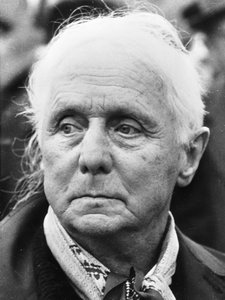
1891 - 1976 , Allemagne


Restez informé(e) des dernières actualités artistiques, des offres exclusives et des idées de décoration.
Parlez-nous de votre projet et nos experts en art vous proposeront 3 suggestions d'œuvres personnalisées.
Laissez-nous sélectionner 3 œuvres rien que pour vous – Gratuit !


 Aperçu en situation
 Envoyer
 Partager
 Détails de l'œuvre

 Télécharger
 Articles similaires
 Radiographie
 Diaporama
 Lire la suite