

 Acrylique sur toileDécoration muraleBaroque
 1648Renaissance
 150.0 x 199.0 cm
 Musée de l'Ermitage
Impressions giclées ou sur toile de qualité musée, avec une production rapide et des finitions au choix. ( Commander la reproduction peinte à la main Télécharger l'image haute résolution)





























Choisissez parmi nos formats prédéfinis qui respectent les proportions originales de l’œuvre.

Vous pouvez saisir vos propres dimensions pour vous adapter à un cadre ou à un espace spécifique. Si la taille sélectionnée ne correspond pas aux proportions de l'image originale, nous recadrerons l'œuvre ou étendrons l'image avec une bordure en miroir ou une couleur unie. Une maquette numérique vous sera envoyée pour approbation avant le début de la production.
Veuillez noter que l'aperçu à l'écran ne reflète pas le recadrage ou l'extension réelle. Seule la maquette montrera avec précision la composition finale.
Bien que des tailles personnalisées soient disponibles, nous vous recommandons de choisir une dimension dans la liste prédéfinie afin de préserver les proportions originales.
Livraison dans le monde entier () en 2 semaines au lieu des 4/5 semaines habituelles. (15 août)


Paysage avec Polyphème
Format de la reproduction
Nicolas Poussin’s Landscape with Polyphemus stands as a cornerstone of Baroque art, yet it embodies an aesthetic profoundly rooted in classical ideals—a testament to Poussin’s unwavering devotion to the principles championed by Raphael and Michelangelo.
Painted in 1648 for Jean Pointel, this monumental oil on canvas (150 x 199 cm) transcends mere depiction; it's a carefully orchestrated tableau designed to evoke contemplation and convey profound moral truths. Located at The Hermitage Museum in St. Petersburg, Russia, it exemplifies the grandeur and intellectual ambition characteristic of the era.
Poussin’s genius lies in his masterful manipulation of perspective and spatial arrangement—techniques honed during his formative years in Rome. The scene unfolds against a backdrop of rugged mountains bathed in ethereal light, establishing a sense of vastness and timelessness. Dominating the composition is Polyphemus, the cyclops from Homer's Odyssey, depicted with unwavering realism as he holds a bow and arrow, poised for action—a deliberate allusion to heroic mythology.
Poussin employed a technique characterized by meticulous detail and subtle tonal gradations—a hallmark of Baroque painting that prioritizes clarity and luminosity. He achieved this effect through painstaking layering of glazes, creating an illusionistic depth that draws the viewer into the scene. The artist’s unwavering adherence to linear perspective—a cornerstone of Renaissance art—further enhances the sense of realism.
His work profoundly impacted subsequent generations of artists, notably Jacques-Louis David and Jean-Auguste-Dominique Ingres, who sought to emulate Poussin's harmonious compositions and idealized figures. Indeed, Cézanne himself acknowledged Poussin’s influence on his artistic vision—a recognition of the enduring power of classical aesthetics.
Beyond its visual splendor, Landscape with Polyphemus carries a symbolic weight that speaks to fundamental human concerns—namely, the confrontation between virtue and vice, order and chaos. The depiction of Polyphemus embodies primal aggression, while the nymphs represent spiritual purity—a dichotomy resolved through the harmonious interplay of light and shadow.
This painting invites viewers to contemplate not only the beauty of nature but also the moral lessons embedded within its narrative—a legacy that continues to inspire admiration and scholarly debate centuries after its creation. Its presence in The Hermitage Museum ensures that this masterpiece of Baroque art remains accessible to audiences worldwide.
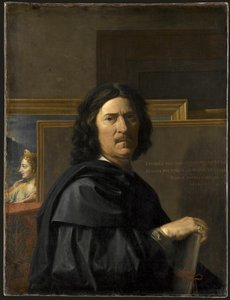
1594 - 1665 , France
Plongez au cœur du Musée Hermitage : découvrez les 25 œuvres incontournables de Rembrandt, Léonard de Vinci et autres maîtres. Histoire, technique & inspiration déco. Reproductions tableaux de qualité sur BuyPopArt.com !

Explorez l'univers de Nicolas Poussin et le classicisme français du XVIIe siècle. Analyse approfondie de son œuvre, des allégories complexes à la maîtrise de la composition. Découvrez l'influence durable de ce maître incontesté.

Explore the captivating world of Baroque Classicism! Discover its history, key artists like Caravaggio & Rubens, and defining characteristics. Expert insights & high-quality reproductions at BuyPopArt.

Explorez l'héritage durable du classicisme français : ses principes fondateurs, les grands maîtres (Poussin, Lorrain), et son influence sur l'art occidental. Analyse approfondie pour passionnés d'histoire de l'art.

Explore the captivating history of mythological narratives in Western art! From ancient Greece to modern masterpieces, discover iconic artworks & symbolism. Expert analysis and high-quality reproductions at BuyPopArt.


Restez informé(e) des dernières actualités artistiques, des offres exclusives et des idées de décoration.
Parlez-nous de votre projet et nos experts en art vous proposeront 3 suggestions d'œuvres personnalisées.
Laissez-nous sélectionner 3 œuvres rien que pour vous – Gratuit !


 Aperçu en situation
 Envoyer
 Partager
 Détails de l'œuvre

 Télécharger
 Articles similaires
 Radiographie
 Diaporama
 Lire la suite







 L'option verre n'est disponible que pour les dimensions inférieures à 110 cm.


