Impressions giclées ou sur toile de qualité musée, avec une production rapide et des finitions au choix. ( Passer à la peinture faite à la main Passer à l'image)





























Choisissez parmi nos formats prédéfinis qui respectent les proportions originales de l’œuvre.

Vous pouvez saisir vos propres dimensions pour vous adapter à un cadre ou à un espace spécifique. Si la taille sélectionnée ne correspond pas aux proportions de l'image originale, nous recadrerons l'œuvre ou étendrons l'image avec une bordure en miroir ou une couleur unie. Une maquette numérique vous sera envoyée pour approbation avant le début de la production.
Veuillez noter que l'aperçu à l'écran ne reflète pas le recadrage ou l'extension réelle. Seule la maquette montrera avec précision la composition finale.
Bien que des tailles personnalisées soient disponibles, nous vous recommandons de choisir une dimension dans la liste prédéfinie afin de préserver les proportions originales.
Livraison dans le monde entier () en 2 semaines au lieu des 4/5 semaines habituelles. (10 août)


Éclipse de danse
Format de la reproduction
René Magritte’s “Waltz Eclipse,” painted in 1958, isn't merely a depiction of two apples suspended in an ethereal space; it’s a deliberate provocation—a masterful exercise in Surrealist philosophy designed to unsettle the viewer and invite contemplation about the nature of reality itself. Created during Magritte’s prolific Vache Period, this artwork embodies the core tenets of Surrealism: juxtaposing incongruous elements to expose hidden contradictions within our everyday experience.
The central figures—two green apples adorned with masks—immediately capture attention. Magritte’s choice isn't accidental; apples have long been symbols of temptation, knowledge, and innocence, while masks represent concealment and disguise. Their placement side-by-side suggests a duality – the visible versus the hidden, the conscious versus the unconscious – mirroring the Surrealist preoccupation with accessing subconscious desires and anxieties. The masks’ blank faces amplify this sense of mystery, forcing us to confront what lies beneath the surface of appearances.
Dominating the upper right corner is a clock face—also suspended in air—a motif recurrent throughout Magritte’s oeuvre. Like the apples, it defies logic and challenges our understanding of time as linear progression. This element reinforces the Surrealist critique of rational thought, suggesting that time itself is subjective and malleable, much like perception. The clock serves as a visual reminder that what we perceive isn't necessarily what *is*, prompting viewers to question accepted truths.
Executed in gouache on paper, “Waltz Eclipse” showcases Magritte’s meticulous attention to detail within an overall atmospheric haze. Gouache—a pigment binder that creates opaque watercolor effects—allowed Magritte to achieve a luminous quality while maintaining precise tonal control. The muted palette contributes to the painting's dreamlike atmosphere, enhancing its emotional impact and immersing the viewer in a realm of subconscious imagery.
"Waltz Eclipse" stands as a testament to Magritte’s enduring legacy as one of the most influential Surrealist artists. It exemplifies his ability to transform familiar objects into symbols laden with philosophical significance, inviting viewers to engage in an intellectual dialogue about perception and representation. Its quiet grandeur—combined with its unsettling ambiguity—continues to inspire admiration and discussion decades after its creation, cementing its place among the masterpieces of 20th-century art.
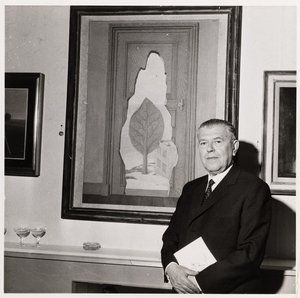
1898 - 1967 , Belgique

Plongez dans l'univers fascinant du Surréalisme avec . Découvrez les 10 chefs-d'œuvre de Dalí, Magritte & Miró qui ont marqué l'histoire de l'art. Reproductions haute définition et inspiration déco sur .
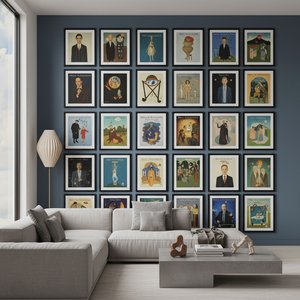
Plongez dans l'univers fascinant de René Magritte avec les 25 œuvres incontournables du maître surréaliste. Découvrez l'histoire, les techniques et la magie de tableaux célèbres comme 'L'Empire des Lumières'. Reproductions d'art de qualité muséale sur BuyPopArt.com.

Plongez dans l'univers fascinant du surréalisme avec BuyPopArt.com ! Découvrez 10 chefs-d’œuvre de Dalí, Magritte et autres artistes emblématiques. Inspirez votre déco avec des reproductions de tableaux exceptionnelles. Explorez la collection en ligne !
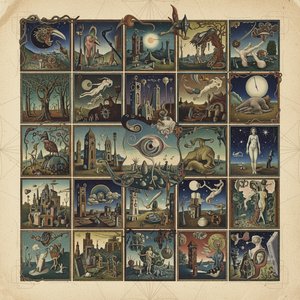
Plongez dans l'univers surréaliste de Max Ernst ! Découvrez les 25 œuvres les plus emblématiques du maître allemand, entre frottage, collage et rêves éveillés. Inspirez votre décoration intérieure avec BuyPopArt : reproductions de tableaux de qualité muséale et collection d'art unique. Explorez la co

Plongez dans l'univers fascinant du surréalisme avec BuyPopArt.com ! Découvrez 10 chefs-d'œuvre iconiques de Dalí, Magritte et Miró. Inspirez votre décoration intérieure avec ces tableaux célèbres et trouvez la reproduction parfaite pour sublimer votre espace. Explorez la collection complète en ligne


Restez informé(e) des dernières actualités artistiques, des offres exclusives et des idées de décoration.
Parlez-nous de votre projet et nos experts en art vous proposeront 3 suggestions d'œuvres personnalisées.
Laissez-nous sélectionner 3 œuvres rien que pour vous – Gratuit !


 Aperçu en situation
 Envoyer
 Partager
 Détails de l'œuvre

 Télécharger
 Articles similaires
 Radiographie
 Diaporama
 Lire la suite







 L'option verre n'est disponible que pour les dimensions inférieures à 110 cm.