Commander l'impression Commander l'impressionAcheter l'image haute résolution Acheter l'image haute résolution PartagerPartager
Détails de l'œuvreDétails de l'œuvre Ajouter aux favoris Ajouter aux favoris TéléchargerTélécharger Articles similairesArticles similaires RadiographieRadiographie DiaporamaDiaporama

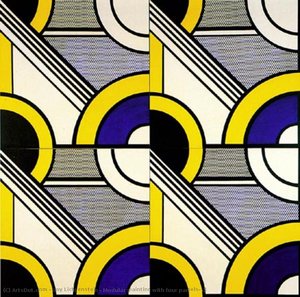
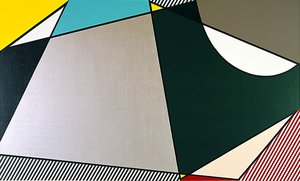
Yellow and withe drip

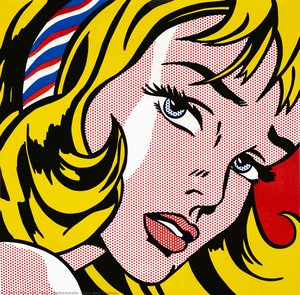
Bold Pop Art by Roy Lichtenstein captures a striking yellow drip against a white canvas—a vibrant testament to American art history. Explore this iconic 1966 masterpiece and bring its playful aesthetic into your home.

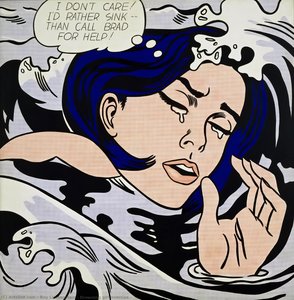
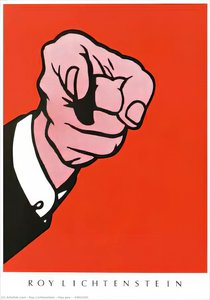
Roy Lichtenstein (1923-1997) était une figure américaine majeure de l’art Pop, connu pour ses peintures emblématiques à la manière des bandes dessinées explorant le consumérisme et l'art classique. Découvrez 'Whaam!', 'Drowning Girl', et bien d'autres.

Reproduction à l'huile faite à la main

Huile sur toile peinte à la main, avec cadre et dimensions personnalisés, réalisée sur commande par nos artistes.

P118B $10
P118H $10
P118W $10
P438Z $10
P508JH $12
P508YH $12
P805H $10
P805Z $10
P919BZ $10
P919G $10
P919XJ $10
P959ZH $10
P968JZ $12
W106C $8
W218G $10
W218JH $8
W218Y $10
W307PJ $10
W316G $10
W316PJ $8
W316Y $10
W398PJ $8
W4111J $10
W500HY $15
W500JH $15
W692G $12
W849H $8
W940BG $15
W953PJ $8

Standard
custom
CM
INCH

Choisissez parmi nos formats prédéfinis qui respectent les proportions originales de l’œuvre.

largeur
hauteur

Vous pouvez saisir vos propres dimensions pour l'adapter à un cadre ou à un espace spécifique. Si la taille sélectionnée ne correspond pas aux proportions de l'image d'origine, nous recadrerons l'œuvre ou prolongerons la peinture avec des éléments peints à la main supplémentaires. Une maquette numérique vous sera envoyée pour approbation avant le début de la production.
Veuillez noter que l'aperçu à l'écran ne reflète pas le recadrage ou l'extension réels. Seule la maquette montrera fidèlement la composition finale.
Bien que des tailles personnalisées soient disponibles, nous vous recommandons de sélectionner une dimension dans la liste prédéfinie afin de préserver les proportions d'origine.

Exemples de personnalisation : remplacer un visage par la photo du client ; ajouter un animal de compagnie (par exemple, remplacer un chat par un chien) ; inclure un message caché en arrière-plan ; modifier le paysage ou les éléments de l'arrière-plan.
Après la commande, l’équipe BuyPopArt.com contactera le client par e-mail pour obtenir ses instructions et lui fournira une maquette d’aperçu.

Livraison dans le monde entier () en 3 à 4 semaines au lieu des 5 semaines habituelles. (21 juillet). Aucune concession sur la qualité.

why_choose_icon
Livraison express gratuite dans le monde entier
why_choose_icon
Toile de lin de haute qualité
why_choose_icon
Assurance transport complète
why_choose_icon
Garantie de remboursement des frais de douane
why_choose_icon
Garantie de fidélité des couleurs
why_choose_icon
Politique de retour de 60 jours (uniquement en cas de défaut)
why_choose_icon
Garantie de remboursement à 100%
why_choose_icon
Réduction sur les achats groupés

Prix total

-

reproduction

Yellow and withe drip

Technique de reproduction

Format de reproduction

-

Prix total final

-

Description de l'œuvre

A Bold Statement Against Tradition: Exploring Roy Lichtenstein’s “Yellow and White Drip”

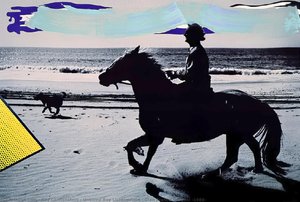
The painting "Yellow and White Drip," created by Roy Lichtenstein in 1966, stands as a cornerstone of Pop Art—a movement that fundamentally questioned the boundaries between high art and popular culture. More than just a visually striking composition, it embodies Lichtenstein’s deliberate rejection of academic conventions and his embrace of graphic techniques borrowed from commercial illustration. This seemingly simple artwork speaks volumes about the anxieties and aspirations of its time, offering a fascinating glimpse into the artistic dialogues shaping the mid-century landscape.

The Genesis of Pop Art: Contextualizing Lichtenstein's Vision

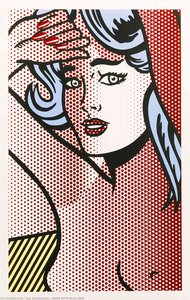
Born in Manhattan in 1923, Roy Fox Lichtenstein’s artistic journey began with an appreciation for realism honed during his early training at the Art Students League and Ohio State University. However, he swiftly recognized the limitations of traditional methods when confronted by the burgeoning influence of American popular culture—specifically comic strips—during World War II. Artists like Lichtenstein responded to this cultural shift by adopting techniques reminiscent of advertising and printing presses, prioritizing bold colors and halftone dots over meticulous brushstrokes. This stylistic choice wasn’t merely aesthetic; it was a conscious effort to dismantle the elitist hierarchies that had dominated the art world for decades.

Decoding the Visual Language: Technique and Composition

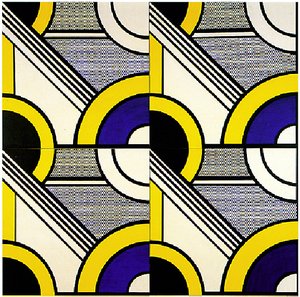
“Yellow and White Drip” exemplifies Lichtenstein's signature technique—the halftone print. This process involves dividing an image into tiny dots of color, varying their density to simulate shading and texture. The resulting effect is remarkably flat and stylized, mimicking the appearance of printed material rather than capturing a naturalistic representation. The stark contrast between the vibrant yellow drip and the pristine white background amplifies this illusion of flatness, emphasizing geometric shapes—specifically green squares—that punctuate the canvas. These squares serve as visual anchors, grounding the dynamic splash of color within a carefully constructed framework.

Symbolism Beyond Surface Appearance: Exploring Lichtenstein’s Intent

While superficially resembling a comic strip panel, “Yellow and White Drip” transcends its source material to convey deeper symbolic meanings. The drip itself can be interpreted as representing spontaneity and disruption—a deliberate antithesis to the precision demanded by academic painting. Furthermore, the repetition of geometric shapes echoes the modernist preoccupation with abstraction, albeit filtered through the lens of commercial imagery. Lichtenstein’s intention wasn't simply to reproduce a visual element; he aimed to provoke contemplation about the relationship between art and everyday life, questioning notions of beauty and originality.

Emotional Resonance: Capturing the Zeitgeist

Ultimately, “Yellow and White Drip” resonates with the emotional landscape of its era—a period marked by postwar optimism tempered by anxieties surrounding nuclear proliferation and societal change. Lichtenstein’s bold aesthetic reflects a desire to escape from the constraints of intellectualism, embracing instead a visual language that speaks directly to the viewer's senses. Reproductions of this artwork offer an opportunity to engage with a pivotal moment in art history—a testament to Lichtenstein’s enduring legacy as one of Pop Art’s most influential innovators.

Biographie de l'artiste

jeune vie et éducation

roy fox lichtenstein, un artiste pop américain de premier plan, est né le 27 octobre 1923 à New York. Il a grandi dans une famille juive de milieu-classe supérieur, son père étant courtier en immobilier et sa mère femme au foyer. L'intérêt de Lichtenstein pour l'art et le design a commencé comme un passe-temps pendant ses années scolaires.

carrière artistique

Après avoir terminé sa scolarité secondaire au Dwight School en 1940, Lichtenstein a étudié à l’Art Students League of New York sous la tutelle de Reginald Marsh. Il a ensuite obtenu une licence en arts plastiques de l'Ohio State University, interrompue par un service militaire de trois ans pendant la Seconde Guerre mondiale.
  • look mickey (1961, National Gallery of Art, Washington, D.C.), l'une des premières œuvres pop de Lichtenstein, a marqué le début de sa carrière influente.
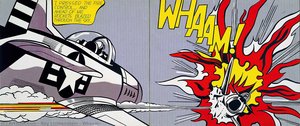
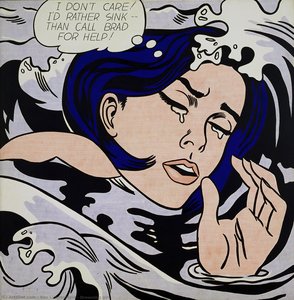
  • Son travail était fortement influencé par la publicité et les styles de bandes dessinées populaires, avec des œuvres notables telles que Wham!, drowning girl et oh, jeff...i love you, too...but...
  • La pièce la plus chère de Lichtenstein, Masterpiece, a été vendue pour 165 millions de dollars en janvier 2017.

enseignement et influences

Lichtenstein a enseigné dans diverses institutions, notamment l'université d'État de New York à Oswego et l'université Rutgers. Son travail a été influencé par Allan Kaprow, un collègue professeur à Rutgers, ce qui a ravivé son intérêt pour les images proto-pop. Expositions notables :
  • the museum chambre de commerce (Toulouse, France), présentant diverses œuvres d'art, y compris celles du mouvement pop art.
  • Le travail de Lichtenstein a été exposé à la Leo Castelli Gallery à New York, avec sa première exposition personnelle en 1962 ayant été entièrement achetée par des collectionneurs influents avant l'ouverture.

héritage et impact

Roy Lichtenstein est décédé le 29 septembre 1997, laissant derrière lui un héritage en tant que figure de proue du mouvement pop art. Son œuvre continue d’être célébrée pour son mélange innovant d’art haut et d’art populaire, ce qui la rend accessible à un public plus large. Références :
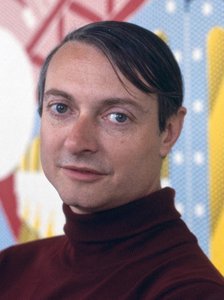
Roy Lichtenstein

Roy Lichtenstein

1923 - 1997 , États-Unis d'Amérique
En bref

  • Artistes Influents:
    • Reginald Marsh
    • Allan Kaprow
  • Date De Décès: 29 septembre 1997
  • Date De Naissance: 27 octobre 1923
  • Lieu De Naissance: Manhattan, États-Unis
  • Mouvement Artistique: Pop Art
  • Nationalité: Américaine
  • Nom Complet: Roy Lichtenstein
  • Oeuvres Notables:
    • Look Mickey
    • Whaam!
    • Drowning Girl
    • Masterpiece
Explorez des œuvres d'art classées par thèmes, styles et caractéristiques.