

 Acrylique sur toileArt muralHigh Renaissance
 1510
1510 72.0 x 57.0 cm
 Kunsthistorisches Museum
Huile sur toile peinte à la main, avec cadre et dimensions personnalisés, réalisée sur commande par nos artistes. ( Passer au tirage Passer à l'image)





























Choisissez parmi nos formats prédéfinis qui respectent les proportions originales de l’œuvre.

Vous pouvez saisir vos propres dimensions pour l'adapter à un cadre ou à un espace spécifique. Si la taille sélectionnée ne correspond pas aux proportions de l'image d'origine, nous recadrerons l'œuvre ou prolongerons la peinture avec des éléments peints à la main supplémentaires. Une maquette numérique vous sera envoyée pour approbation avant le début de la production.
Veuillez noter que l'aperçu à l'écran ne reflète pas le recadrage ou l'extension réels. Seule la maquette montrera fidèlement la composition finale.
Bien que des tailles personnalisées soient disponibles, nous vous recommandons de sélectionner une dimension dans la liste prédéfinie afin de préserver les proportions d'origine.
Livraison dans le monde entier () en 3 à 4 semaines au lieu des 5 semaines habituelles. (6 août). Aucun compromis sur la qualité.


Un Soldat
Format de la reproduction
Giorgio Barbarelli da Castelfranco, universally known as Giorgione (c. 1477–78 or 1473–74 – the precise birthdate remains debated), stands as one of the most elusive figures within Renaissance art—a painter whose life tragically curtailed at just thirty-two or thirty-three left an indelible mark on Venetian artistic heritage.
Unlike many contemporaries whose biographies unfold with relative clarity, Giorgione’s story is shrouded in mystery, pieced together from fragmentary archival records and the romanticized accounts of Giorgio Vasari. Yet, what emerges suggests a man deeply rooted in the vibrant cultural landscape of Venice—a city that simultaneously fostered artistic innovation and an appreciation for sensual beauty.
His formative years were spent under Giovanni Bellini’s tutelage, absorbing the established traditions of Venetian painting before forging his own distinctive voice. This apprenticeship instilled within him a profound understanding of color theory and compositional balance – elements that would become hallmarks of Giorgione's oeuvre.
"The Tempest," completed around 1505–1510, exemplifies Giorgione’s revolutionary approach to artistic representation. Departing from the prevailing conventions of disegno—precise drawing—he prioritized colore—color—as the primary vehicle for conveying emotion and capturing the essence of the scene.
The painting depicts a woman seated beneath a tree, nursing her infant child, accompanied by a soldier carrying a staff. This seemingly simple composition belies an astonishing level of sophistication. Giorgione skillfully employs chiaroscuro—the dramatic interplay of light and shadow—to sculpt the figures’ forms and imbue them with palpable presence.
More than just aesthetically pleasing, “The Tempest” is imbued with symbolic resonance. The distant cityscape—particularly the tower bearing the emblem of Saint Mark—represents Padua, a city renowned for its humanist scholarship and artistic patronage. The stormy sky serves as a metaphor for life’s unpredictable vicissitudes, mirroring the anxieties prevalent during Giorgione's time.
Giorgione’s decision to place his figures prominently within the landscape—rather than relegating them to a more conventional interior setting—was groundbreaking. It signaled a decisive break from the artistic conventions of Bellini and foreshadowed the stylistic innovations championed by Titian and Tintoretto.
Furthermore, Giorgione's masterful use of color—particularly the muted hues of olive green and ochre—creates an atmosphere of serene contemplation. The painting’s emotional impact is profound: it evokes feelings of tranquility, melancholy, and a subtle awareness of mortality – themes that resonate powerfully with viewers even today.
Despite the absence of a signature—a common practice among Renaissance artists—Giorgione's influence on Venetian painting remains undeniable. His pioneering techniques paved the way for subsequent generations of painters, establishing him as a cornerstone of High Renaissance artistic achievement.
“The Tempest” continues to fascinate art historians and critics alike, prompting ongoing debates about its iconography and emotional depth. Its enduring mystery—coupled with its breathtaking beauty—solidifies Giorgione’s place among the most celebrated artists of his era—a testament to his genius and a beacon of artistic innovation.
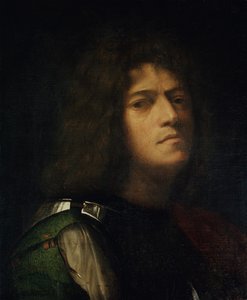
1477 - 1510 , Italie

Plongez au cœur de la Haute Renaissance avec les 10 chefs-d'œuvre incontournables de Léonard de Vinci, Michel-Ange et Raphaël. Découvrez l'histoire fascinante de ces tableaux emblématiques et trouvez l'inspiration pour une décoration intérieure d'exception sur .

Plongez dans l'univers de Raphaël avec les 25 œuvres incontournables du maître italien. Découvrez l'histoire, la technique et la beauté intemporelle de ses chefs-d'œuvre Renaissance. Reproductions de qualité muséale sur BuyPopArt.com.

Explore the captivating world of Nicolaes Berchem, a leading Dutch Golden Age painter. Discover his idyllic landscapes, masterful technique & lasting influence on art history. Learn more at BuyPopArt.

Explorez l'éclat unique de la Renaissance vénitienne (1430–1580). Découvrez Titien, Tintoret et Bellini, les maîtres du 'colorito'. Expertise art & collectionneurs. Reproduction tableaux sur BuyPopArt.

Explore the enigmatic world of Giorgione, a pivotal figure in the Venetian Renaissance. Discover his innovative techniques, iconic paintings like 'The Tempest', and lasting influence on art history. Learn more at BuyPopArt.


Restez informé(e) des dernières actualités artistiques, des offres exclusives et des idées de décoration.
Parlez-nous de votre projet et nos experts en art vous proposeront 3 suggestions d'œuvres personnalisées.
Laissez-nous sélectionner 3 œuvres rien que pour vous – Gratuit !


 Aperçu en situation
 Envoyer
 Partager
 Détails de l'œuvre

 Télécharger
 Articles similaires
 Radiographie
 Diaporama
 Lire la suite







 L'option verre n'est disponible que pour les dimensions inférieures à 110 cm.


