A Pioneer of Abstract Expressionism in Brazil: The Life and Art of Tomie Ohtake
Tomie Ohtake, a name synonymous with the vibrant energy and bold experimentation of Brazilian abstract art, stands as a pivotal figure in the country’s modernist landscape. Born in Kyoto, Japan, in 1913, her journey to becoming one of Brazil's most celebrated artists was anything but conventional. Ohtake’s early life offered little indication of the artistic path she would forge. Her family emigrated to São Paulo, Brazil, in 1928, seeking new opportunities and escaping a Japan grappling with economic hardship. Initially focused on assisting her family’s coffee plantation business, it wasn't until the late 1930s, at the age of twenty-five, that Ohtake began to seriously explore her artistic inclinations. This relatively late start proved remarkably fruitful, fueled by an innate curiosity and a relentless pursuit of self-expression. She enrolled in the Escola Nacional de Belas Artes (National School of Fine Arts) in Rio de Janeiro, but found its traditional academic approach stifling. It was through independent study, exposure to European modernism, and engagement with São Paulo’s burgeoning artistic community that Ohtake truly discovered her voice.
Early Influences and the Development of a Unique Style
Ohtake's formative years in Brazil coincided with a period of intense cultural exchange and experimentation. The 1930s witnessed the arrival of European artists fleeing political turmoil, bringing with them diverse influences – from Cubism and Surrealism to Expressionism. While she absorbed these currents, Ohtake resisted direct imitation, instead forging a distinctly personal style rooted in abstraction. Her early works, often executed in oil on canvas, reveal a fascination with geometric forms and dynamic compositions. However, what truly set her apart was her innovative use of materials. She began incorporating unconventional elements into her paintings – sand, sawdust, fabric, even coffee grounds – creating textured surfaces that challenged traditional notions of painting. This tactile approach reflected not only her connection to the Brazilian landscape but also a desire to break free from the constraints of representation.
“I never wanted to copy reality,” she once stated,
“I wanted to create my own.” The influence of Japanese aesthetics – particularly its emphasis on simplicity, asymmetry, and natural materials – is subtly present in her work, lending a unique sensibility to her abstract forms. Her early exhibitions were met with mixed reactions; some critics dismissed her work as primitive or lacking technical skill, while others recognized the originality and power of her vision.
The Height of Creativity: Sculptures and Public Art
The 1950s marked a turning point in Ohtake’s career, with her increasing focus on sculpture. She began experimenting with steel, aluminum, and concrete, creating monumental abstract forms that redefined the urban landscape of São Paulo. These sculptures were characterized by their bold lines, dynamic angles, and playful interaction with space. Unlike many modernist sculptors who favored polished surfaces, Ohtake embraced the raw materiality of her chosen materials, often leaving them unpainted or minimally treated. This emphasis on texture and form resonated deeply with the Brutalist architectural movement that was gaining prominence in Brazil at the time. Ohtake’s sculptures weren't confined to galleries or museums; she actively sought opportunities to create public art installations, believing that art should be accessible to everyone. Her iconic sculpture “Cosmic Ovoid” (1962), located in Ibirapuera Park in São Paulo, became a symbol of the city and a testament to her commitment to democratizing art.
Throughout the 1960s and 70s, she continued to push boundaries, exploring new materials and techniques, and creating increasingly ambitious public works that transformed urban spaces into dynamic artistic environments.
Legacy and Historical Significance
Tomie Ohtake’s influence on Brazilian art is immeasurable. She paved the way for subsequent generations of abstract artists, challenging conventional norms and inspiring a new wave of experimentation. Her work helped to establish Brazil as a major center for modernist art, gaining international recognition and acclaim.
- She was one of the first female artists in Brazil to achieve widespread critical and commercial success.
- Her pioneering use of materials broadened the definition of sculpture and painting.
- Her commitment to public art made art accessible to a wider audience.
Beyond her artistic achievements, Ohtake’s life story is one of resilience, determination, and unwavering dedication to her craft. She overcame numerous obstacles – including gender bias and cultural barriers – to become a leading figure in the Brazilian art world. In 1986, she founded the Instituto Tomie Ohtake in São Paulo, dedicated to promoting contemporary art and providing educational opportunities for aspiring artists. The institute continues to be a vital center for artistic innovation and serves as a lasting tribute to her legacy. Today, Tomie Ohtake’s work is exhibited in major museums around the world, cementing her place as one of the most important abstract expressionist artists of the 20th century. Her art remains a powerful testament to the transformative power of creativity and the enduring spirit of innovation.


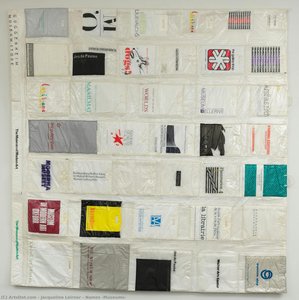
 1988
1988 150.0 x 150.0 cm
 Commander l'impression





 Aperçu en situation
 Envoyer
 Partager
 Détails de l'œuvre

 Télécharger
 Articles similaires
 Radiographie
 Diaporama
 Lire la suite




































 L'option verre n'est disponible que pour les dimensions inférieures à 110 cm.