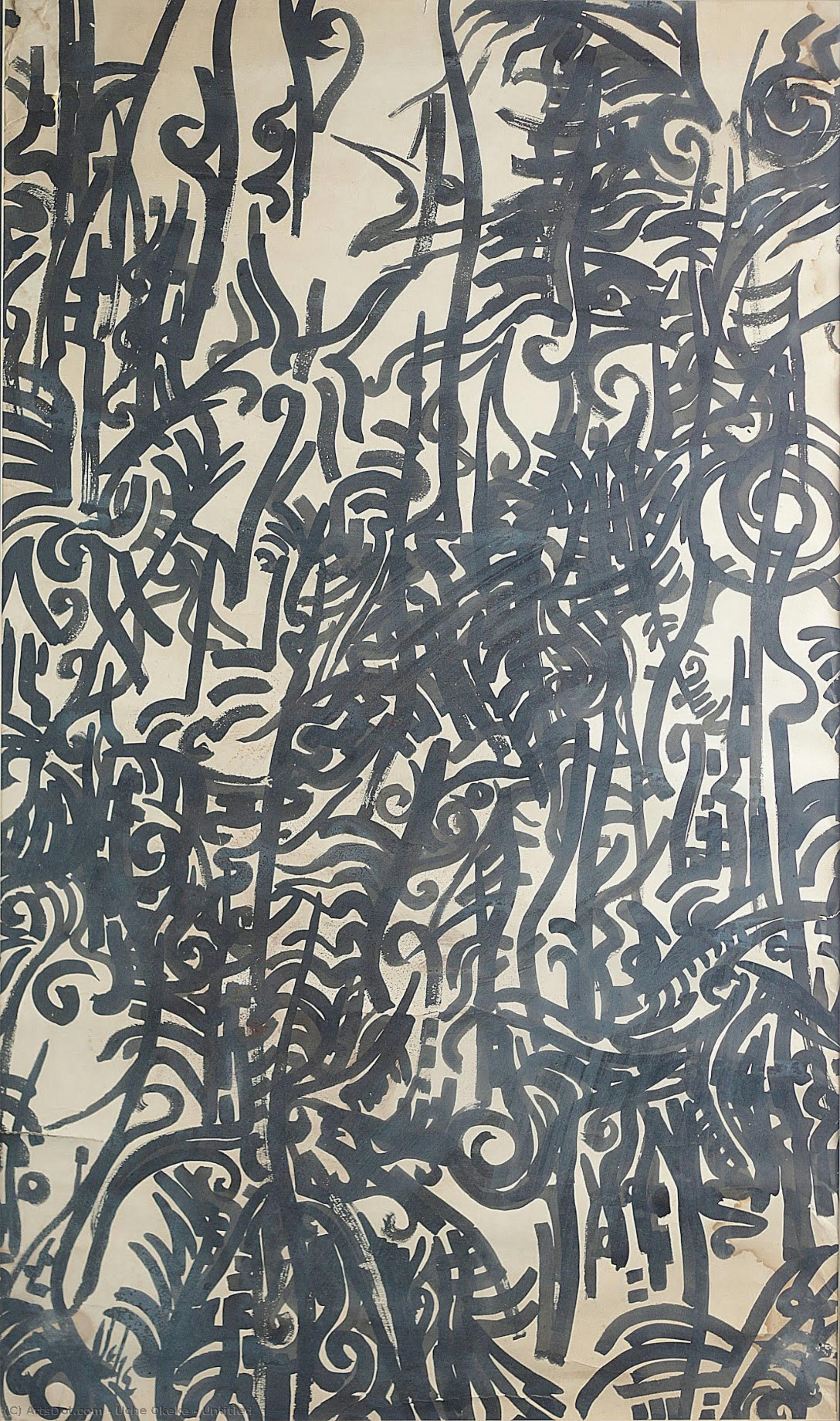
 1961
1961 102.0 x 73.0 cm
 Musée Yemisi Shyllon
Acquérez une image numérique haute résolution et optimisée, d'une qualité bien supérieure à l'aperçu en ligne.
Chaque fichier est méticuleusement préparé par nos spécialistes internes à l'aide d'outils avancés et d'une retouche manuelle experte. Nous garantissons que chaque image possède une clarté exceptionnelle, une précision des couleurs irréprochable et un niveau de détail fin.
Le fichier final est livré par e-mail sous 72 heures, optimisé pour une utilisation immédiate dans des contextes professionnels, éditoriaux et d'impression. Il offre la même qualité de confiance que celle utilisée par les plus grands studios de création, éditeurs et galeries.
Téléchargez un fichier haute résolution pour votre usage personnel, l'impression et vos projets créatifs. ( Commander l'impression Commander la reproduction peinte à la main)
En choisissant BuyPopArt.com, vous n'obtenez pas seulement une simple image : vous recevez une œuvre numérique sublimée avec professionnalisme, conçue avec précision et accompagnée d'une garantie de satisfaction. Voici tout ce qui accompagne automatiquement votre commande :

Votre fichier d'image numérique haute résolution vous sera envoyé par e-mail sous 72 heures après votre commande — prêt à un usage immédiat.

Votre œuvre d'art bénéficie d'une optimisation professionnelle grâce à des outils d'IA avancés et une retouche manuelle, garantissant un niveau maximal de détail, de clarté et de fidélité chromatique.

Vous avez accidentellement supprimé ou perdu votre fichier ? Pas d'inquiétude — nous vous le renverrons gratuitement, quand vous le souhaitez.

Profitez de votre œuvre d'art instantanément sans frais de douane ni de livraison — les téléchargements numériques sont toujours exonérés de taxes.

Nous garantissons que votre image numérique reproduit les couleurs de l'original aussi fidèlement que possible grâce à des outils professionnels et une gestion rigoureuse des couleurs.

Si vous n'êtes pas satisfait de votre image numérique, nous la retoucherons ou vous rembourserons 100% sous 60 jours — sans poser de questions.

Pas satisfait ? Obtenez un remboursement intégral dans les 60 jours suivant la réception de votre fichier numérique — sans aucune question posée.

Achetez 3 images, économisez 10% - Achetez 5, économisez 15% - Achetez 10+, économisez 20%. Idéal pour les projets créatifs, les galeries et les agences.
Uche Okeke (1933-2016) stands as a monumental figure in the history of Nigerian art, a bridge between traditional aesthetics and the burgeoning possibilities of modern expression. Born in Nimo, Anambra State, Nigeria, into a family deeply rooted in Igbo culture, Okeke’s artistic journey was shaped by both ancestral heritage and a conscious engagement with the complexities of post-colonial identity. His work isn't simply paintings; it’s a vibrant tapestry woven from memory, folklore, and a profound understanding of the African landscape – a visual narrative that continues to resonate today.
Okeke’s early life provided him with an invaluable foundation. He learned *uli*, the intricate line-drawing tradition practiced by Igbo women, directly from his mother. This wasn't merely imitation; it was an immersion into a system of symbolic communication, where lines held layers of meaning relating to fertility, protection, and social status. Crucially, Okeke recognized the potential of this seemingly simple technique as a springboard for a radically new artistic language. He understood that *uli*, with its inherent dynamism and expressive power, could be adapted and transformed to address the challenges and aspirations of a newly independent nation.
Okeke’s artistic trajectory gained significant momentum through his association with the Zaria School of Art in the late 1950s. This influential group, centered at the Nigerian College of Arts, Science and Technology (now Ahmadu Bello University), represented a deliberate rejection of the prevailing colonial influences within the art program. Rather than adhering to European academic styles, the artists of Zaria sought to forge an indigenous artistic identity – a concept they termed “natural synthesis.” This philosophy advocated for drawing inspiration from Nigeria’s rich cultural heritage, including its diverse artistic traditions, religious beliefs, and social structures.
Okeke played a pivotal role in articulating this approach. He believed that art should be rooted in the lived experiences of Nigerians, reflecting their values, concerns, and aspirations. His work began to incorporate elements of *uli*, alongside other symbolic motifs drawn from Igbo cosmology and folklore – animals, spirits, and ancestral figures rendered with bold lines and dynamic compositions. This wasn’t simply a decorative exercise; it was an attempt to create a visual language that could articulate the complexities of modern Nigerian life while honoring its cultural roots.
Okeke's artistic style is immediately recognizable by his masterful use of line. He employed lines not merely as outlines but as conduits for meaning, creating a visual vocabulary that was both abstract and deeply rooted in tradition. His compositions often feature sinuous curves, sharp angles, and intricate patterns – echoes of *uli* motifs and the rhythms of the natural world. The landscapes he depicted—often evocative of the savannahs of his childhood—are rarely literal representations; instead, they are imbued with symbolic significance, reflecting themes of spirituality, resilience, and the interconnectedness of life.
Key to understanding Okeke’s work is recognizing the importance of symbolism. He skillfully integrated *uli* symbols – such as the snake (representing fertility and transformation), the three-lobed kola nut (a symbol of unity and hospitality), and various animal figures—into his compositions, creating a layered visual narrative that invites interpretation. His use of space is equally deliberate, often employing negative space to create a sense of dynamism and movement.
Among Okeke’s most celebrated works are pieces like “Savannah Landscape” (1962) and “Untitled” (1961). "Savannah Landscape" exemplifies his ability to distill the essence of a landscape into its fundamental elements, using bold lines to capture the heat, texture, and spirit of the Nigerian savannah. “Untitled,” a dense, abstract composition, showcases his mastery of *uli* techniques and his exploration of symbolic themes. His series “Oja” (1962), created during his time in Lagos, further solidified his reputation as a groundbreaking artist.
Uche Okeke’s influence extends far beyond the canvases he produced. He played a crucial role in shaping the trajectory of Nigerian modernism, inspiring generations of artists to embrace their cultural heritage and explore new artistic possibilities. His commitment to “natural synthesis” provided a framework for artists to engage with both tradition and modernity, creating art that was simultaneously rooted in the past and oriented towards the future. Today, Uche Okeke is remembered not only as a gifted artist but also as a visionary who helped to define the visual identity of Nigeria.

1933 - 2016


Restez informé(e) des dernières actualités artistiques, des offres exclusives et des idées de décoration.
Parlez-nous de votre projet et nos experts en art vous proposeront 3 suggestions d'œuvres personnalisées.
Laissez-nous sélectionner 3 œuvres rien que pour vous – Gratuit !


 Aperçu en situation
 Envoyer
 Partager
 Détails de l'œuvre

 Télécharger
 Articles similaires
 Radiographie
 Diaporama
 Lire la suite