Commander la reproduction Commander la reproductionAcheter l'image haute résolution Acheter l'image haute résolution PartagerPartager
Détails de l'œuvreDétails de l'œuvre Ajouter aux favoris Ajouter aux favoris TéléchargerTélécharger Articles similairesArticles similaires RadiographieRadiographie DiaporamaDiaporama

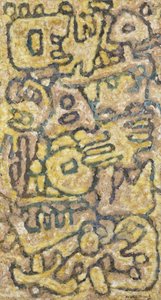
Bamboo

Explore Yi Eungro's (Lee Ungno) innovatif art : koreenisch-fraansch schilder die mengt orientale en occidentaal stijlen, bekend voor abstracte inkt collages & menigte schilderingen. Een kunstenaar die een belangrijke rol speelde bij het diversifiëren van de toepassing van Oostelijke kunstmaterialen in moderne kunst.

Giclée / Impression d'art

Impression giclée ou sur toile de qualité musée, avec une production rapide et des finitions au choix.

Standard
custom
CM
INCH

Choisissez parmi nos formats prédéfinis qui respectent les proportions originales de l’œuvre.

largeur
hauteur

Vous pouvez saisir vos propres dimensions pour vous adapter à un cadre ou à un espace spécifique. Si la taille sélectionnée ne correspond pas aux proportions de l'image originale, nous recadrerons l'œuvre ou étendrons l'image avec une bordure en miroir ou une couleur unie. Une maquette numérique vous sera envoyée pour approbation avant le début de la production.
Veuillez noter que l'aperçu à l'écran ne reflète pas le recadrage ou l'extension réelle. Seule la maquette montrera avec précision la composition finale.
Bien que des tailles personnalisées soient disponibles, nous vous recommandons de choisir une dimension dans la liste prédéfinie afin de préserver les proportions originales.

Livraison dans le monde entier () en 2 semaines au lieu des 4/5 semaines habituelles. (20 juillet)

why_choose_icon
Livraison express gratuite dans le monde entier

why_choose_icon
Toile de lin de haute qualité
why_choose_icon
Assurance transport complète
why_choose_icon
Garantie de remboursement des frais de douane
why_choose_icon
Garantie de fidélité des couleurs
why_choose_icon
Politique de retour de 60 jours (uniquement en cas de défaut)
why_choose_icon
Garantie de remboursement à 100%
why_choose_icon
Réduction sur les achats groupés

Prix total

-

reproduction

Bamboo

Giclée / Impression d'art

Format de reproduction

-

Prix total final

-

Description de l'œuvre

The starting point of Lee Ungno’s artistic world was bamboo, one of the “Four Gracious Plants (Sagunja),” and it was also bamboo that he favored most as a subject throughout his life. That he used “Juksa,” meaning “bamboo scholar,” as his courtesy name before he chose “Goam” is just another indicator of his love for bamboo.After Lee went to France, his bamboo paintings underwent significant change, resulting in greater variety of form. One of the most noticeable changes that occurred in this period is that the bamboo leaves were made more prominent and the stems given less attention. No one knows exactly when this new tendency began, but it was around 1969 that the bamboo in Lee’s artworks began to have more profuse leaves. In the tradition of East Asian bamboo paintings, the stem was supposed to rise straight upwards to represent the unwavering will of the noble Confucian elite. Lee’s bamboo paintings, however, show that he was more interested in the leaves, which he viewed as being more easily affected by the surrounding environment. It was Bamboo in Wind (Pungjuk), which Lee painted after seeing a bamboo grove being shaken violently by a storm and sent to the 10th Joseon Art Fair in 1931, where it received a Critic’s Special Choice (Teukseon) award, that led to his decision to lead the life of an artist. One may conclude, then, that the change that occurred in his paintings in the late 1960s was rooted in the strong impression and influence that those troubled bamboo trees had on him in those early days.

Biographie de l'artiste

Early Life and Training

Yi Eungro (이응노), also known as Lee Ungno, was born in Seoul, South Korea in 1904. His childhood was shaped by a brief foray into Hongseong Botong Hakyo (홍성보통학교, 홍城초등학교, 洪城普通學校), after which he dedicated himself to mastering painting under Yeomjae Song Tae-hoe from 1920. This formative influence instilled in him the foundational principles of Korean classical painting and set the stage for his artistic journey.

Artistic Career in Korea and Japan

Lee Ungno’s artistic vocation blossomed when he relocated to Seoul in 1922, becoming an apprentice to Haegang Kim Gyu-jin—a celebrated calligrapher-painter-photographer—who profoundly impacted his stylistic development. He honed his skills primarily through the study of “Haegang Style,” focusing on capturing the essence of traditional Korean landscape painting with meticulous detail and expressive brushwork. A pivotal moment arrived in 1923 when his depiction of a bamboo, Mukjuk (묵죽, 墨竹, ink bamboo), garnered recognition at the 3rd Annual Joseon Art Exhibition—a testament to his burgeoning talent and securing him a place among Korea’s emerging artistic voices. Throughout the colonial period, Lee consistently achieved acclaim in successive Joseon Art Exhibitions, demonstrating unwavering dedication and establishing himself as a prominent figure within Korean art circles. However, recognizing the need for innovation, he championed the modernization of Eastern ink painting techniques, advocating for stylistic advancements inspired by Western artistic traditions. From the early 1930s onward, Lee experimented with blending Eastern mediums and brushstrokes alongside Western perspective and form—a bold step toward forging a distinctive artistic identity.

International Recognition and Later Life

Following intensive training in traditional inkwash painting in Korea until 1933, Lee embarked on a transformative path towards embracing Western influences. He pursued his studies in Tokyo, immersing himself in the realm of realistic expression championed by the Japanese Southern School of Painting—a pivotal experience that broadened his artistic horizons. Notably, he gained acceptance as a pupil of Matsubayasi Keigetsu, furthering his understanding of Western painting methodologies. In 1958, Lee relocated to France, where he solidified his position as an abstract artist—a decision fueled by the encouragement of exhibitions showcasing his work and marking a significant turning point in his artistic career. He achieved renown for his series of ink and paper collages, abstract letters, and crowd paintings—works that epitomized the spirit of French abstraction and cemented his legacy as one of Korea’s foremost pioneers in this movement. Lee Ungno's unwavering commitment to artistic exploration continued throughout his life, leaving an indelible mark on Korean art history.

Notable Achievements

Lee Ungno’s contribution to Korean art is undeniable. He was recognized as a cornerstone of the first generation of Korean abstract artists and played a crucial role in elevating Eastern artistic traditions within the global landscape. His museum, inaugurated in Daejeon in 2007, serves as a beacon for preserving and disseminating his artistic legacy—a testament to his enduring influence on subsequent generations of Korean painters.
이응노

이응노

1904 - 1989 , Corée du Sud

En bref

  • Artistic Movement Or Style: Eastern & Western Expressionism
  • Artists Or Movements Influenced By This Artist: ['Haegang Style']
  • Artists Who Influenced This Artist: ['Yeomjae Song Tae-hoe']
  • Date Of Birth: January 12, 1904
  • Date Of Death: January 10, 1989
  • Full Name: Yi Eungro (Lee Ungno)
  • Nationality: Korean-French
  • Notable Artworks: ['Composition']
  • Place Of Birth: Seoul, South Korea
Explorez des œuvres d'art classées par thèmes, styles et caractéristiques.