x


Hand-painted oil on canvas in your size and frame, made to order by our artists.





























Pick from our preset sizes that match the artwork's original proportions.

You may enter your own dimensions to fit a specific frame or space. If your selected size does not match the original image's proportions, we will either crop the artwork or extend the painting with additional hand-painted elements. A digital mockup will be sent for your approval before production begins.
Please note that the on-screen preview does not reflect the actual cropping or extension. Only the mockup will accurately show the final composition.
While custom sizes are available, we recommend selecting a dimension from the predefined list to preserve the original proportions.
Worldwide Delivery () in 3/4 weeks instead of standard 5 weeks. (16 July). No compromise on quality.


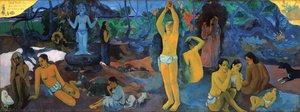
Where do we come from what are we where are we going
Reproduction Size
Paul Gauguin’s monumental painting is more than just an artwork; it's a profound visual poem exploring humanity’s fundamental questions: Where do we come from? What are we? Where are we going?
Created during his time in Tahiti, this large-scale work (over 139 x 374 cm) presents a complex allegorical scene populated by thirteen figures representing different stages of life – from infancy to old age. Arranged across a lush, dreamlike landscape blending Tahitian scenery with symbolic elements, the composition deliberately defies traditional Western narrative structure, reading from right to left. This unconventional approach emphasizes the cyclical nature of existence rather than a linear progression.
Gauguin’s distinctive Post-Impressionist style is powerfully evident in this painting. Rejecting the fleeting impressions of light favored by earlier Impressionists, he employed Synthetism – a technique prioritizing subjective experience and symbolic meaning over realistic representation. He utilized flat planes of vibrant color, bold outlines, and simplified forms to create an emotionally resonant image. The rich palette, dominated by blues contrasted with warm yellows, oranges, and reds, isn’t naturalistic but deliberately chosen for its emotional impact.
This painting reflects Gauguin's deep fascination with non-Western cultures, particularly that of Polynesia. Disillusioned with European civilization, he sought a more authentic existence in Tahiti, believing it offered a connection to primal human roots. The inclusion of a Tahitian idol hints at the spiritual beliefs of the region and Gauguin’s own exploration of alternative philosophies. This work represents a pivotal moment in his artistic journey, moving away from Impressionism towards a uniquely personal and symbolic style.
The symbolism within the painting is rich and open to interpretation. The central figure with raised arms can be seen as an appeal to a higher power or humanity’s eternal search for meaning. Birds may represent souls, while other elements – like the sleeping infant and contemplative elders – embody different stages of life's journey. Gauguin invites viewers to contemplate their own place within this grand existential framework.
This artwork evokes a sense of mystery, contemplation, and profound emotional depth. Its scale and vibrant colors make it a captivating focal point for any space. A reproduction of this masterpiece will bring an air of intellectual curiosity and artistic sophistication to a living room, study, or gallery wall. It’s a piece that sparks conversation and encourages viewers to reflect on the enduring questions of human existence.
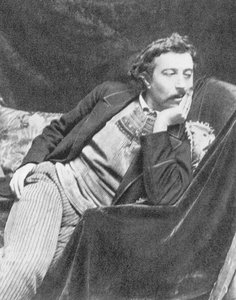
1848 - 1903 , France

Explore the profound emotional depth & innovative techniques of Post-Impressionism with BuyPopArt. Discover Cézanne, Van Gogh, Gauguin & more – and their lasting impact on modern art.

Explore the nuances of Impressionism & Post-Impressionism with . Expert insights for collectors on style, investment, and acquiring museum-quality reproductions.

Explore the captivating world of Paul Gauguin – his rejection of realism, embrace of Primitivism & Symbolism, and lasting impact on modern art. Discover insights into his iconic works and legacy with BuyPopArt.

Explore the profound emotional depth & formal innovations of Post-Impressionism with our expert guide. Discover Cézanne, Van Gogh, Gauguin & more. Learn about art history, collecting, and investing in this pivotal movement.

Explore the fascinating world of color theory in painting! Discover how Impressionist & Post-Impressionist masters used vibrant hues to evoke emotion and create lasting impact. Expert insights for collectors & art enthusiasts.


Stay updated with the latest art news, exclusive offers, and decoration ideas.
Tell us about your project and our art experts will provide you with 3 personalized art suggestions.
Let Us Curate 3 Options Just for You - Free!


 Buy print
 Send
Send Share
Share
 Details

 Download
 Similars
 X-Ray
X-Ray Diaporama

 Read More







 Glass option is only available in size under 110 CM