x


 WatercolorWallArtPost-Impressionism
 1885
1885 32.0 x 50.0 cm
 Courtauld Gallery
Hand-painted oil on canvas in your size and frame, made to order by our artists.





























Pick from our preset sizes that match the artwork's original proportions.

You may enter your own dimensions to fit a specific frame or space. If your selected size does not match the original image's proportions, we will either crop the artwork or extend the painting with additional hand-painted elements. A digital mockup will be sent for your approval before production begins.
Please note that the on-screen preview does not reflect the actual cropping or extension. Only the mockup will accurately show the final composition.
While custom sizes are available, we recommend selecting a dimension from the predefined list to preserve the original proportions.
Worldwide Delivery () in 3/4 weeks instead of standard 5 weeks. (16 July). No compromise on quality.


La Montagne Sainte-Victoire
Reproduction Size
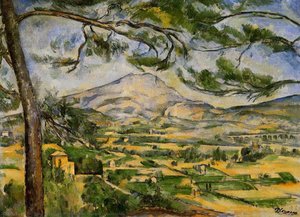
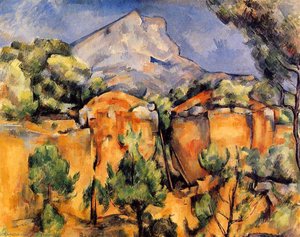
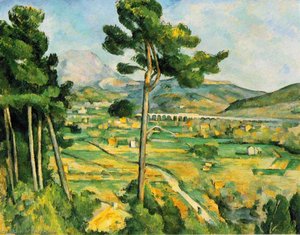
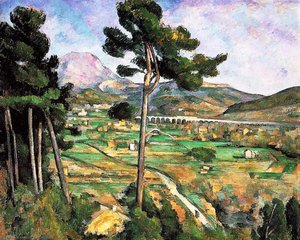
Paul Cézanne's 1885 watercolor, "La Montagne Sainte-Victoire," isn’t merely a depiction of a mountain; it’s an intimate meditation on place, memory, and the very essence of seeing. This deceptively simple work, executed during a pivotal period in Cézanne’s artistic development, reveals a profound shift away from the fleeting impressions of Impressionism towards a more structured, geometric approach that would profoundly influence generations of artists to come. The painting offers a serene glimpse into Cézanne's native Provence, capturing not just its physical form but also the emotional resonance he felt with this iconic landmark – a mountain that became, for him, a symbol of stability and enduring beauty.
Cézanne’s masterful handling of watercolor is immediately striking. Unlike the rich, layered impasto characteristic of his oil paintings, this work embraces an economy of touch, utilizing delicate pencil lines and washes of color to build form with remarkable precision. The mountain's face isn’t rendered with bold modeling; instead, it’s suggested through sparse, almost hesitant strokes, creating a sense of depth and volume that belies the medium’s inherent fluidity. Notice how the loose hatching and patches of pale blue watercolor subtly define the contours, mimicking the way light plays across rock surfaces. The foreground, meticulously worked with restrained greens, blues, yellows, and oranges – carefully layered to create an illusion of atmospheric perspective – contrasts beautifully with the distant, diluted hues that suggest a vast expanse of sky. This deliberate contrast highlights Cézanne’s understanding of color as an organizing principle, guiding the viewer's eye through the composition.
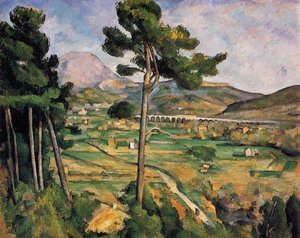
Montagne Sainte-Victoire held a deeply personal significance for Cézanne. He considered it a central element of his artistic identity, returning to its slopes countless times throughout his life – both as a subject for painting and as a source of profound contemplation. The mountain’s presence in this watercolor isn't simply topographical; it embodies stability, permanence, and a connection to the land. The subtle inclusion of human figures—barely suggested—adds a scale to the landscape, reminding us of our own place within this vast and enduring scene. A horizontal strip on the right side, reminiscent of the viaduct visible in his oil painting from The Courtauld Gallery, subtly connects this watercolor to his broader artistic project, suggesting a continuous exploration of form and space.
“La Montagne Sainte-Victoire” stands as a quintessential example of Cézanne’s evolving style – a bridge between the Impressionist pursuit of capturing fleeting moments and his later, more structured approach. The painting embodies the core tenets of Post-Impressionism: an emphasis on color, form, and personal expression. Cézanne wasn't interested in replicating reality; he was striving to capture its underlying structure, its essential geometry. This is evident in the way he simplifies forms, reduces them to their fundamental shapes, and uses color not just to represent appearance but to define spatial relationships. The painting’s diffused lighting, devoid of strong shadows, contributes to a sense of tranquility and invites quiet contemplation – a hallmark of Cézanne's artistic vision. This work, executed in watercolor on paper, demonstrates his growing mastery of the medium, showcasing an extraordinary ability to convey both technical skill and profound emotional depth.
A high-quality reproduction of “La Montagne Sainte-Victoire” offers a captivating glimpse into Cézanne’s world – a world of quiet observation, artistic exploration, and enduring beauty. Its serene composition and masterful use of color make it an ideal addition to any collection or interior space, bringing the spirit of Provence directly into your home.
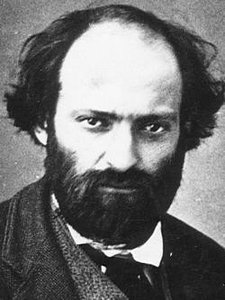
1839 - 1906 , France

Journey through 10 iconic Impressionist landscapes by Monet, Renoir & Degas. Explore the history, techniques & emotions behind these masterpieces. Find museum-quality reproductions for your home at BuyPopArt.com – where art comes to life! Discover all masterpieces on BuyPopArt.com

Discover the captivating world of Charles Fraser (1782-1860), a leading American artist renowned for his serene landscapes and detailed portraits of Southern life. Explore his legacy & find museum-quality reproductions at BuyPopArt.

Explore the captivating landscapes of Marcel Dyf (1899-1985). Discover his Impressionist roots, subtle Surrealism, and enduring legacy. Learn about his life, art, and value with BuyPopArt.
Journey through 25 iconic artworks by Paul Cézanne – a master of Impressionism and Post-Impressionism. Explore his landscapes, still lifes, and the stories behind these timeless masterpieces. Discover museum-quality reproductions & curated decor at BuyPopArt.com.

Explore the captivating world of watercolor painting! Discover its rich history, essential techniques, influential artists & collecting tips from art experts. A comprehensive guide for enthusiasts.


Stay updated with the latest art news, exclusive offers, and decoration ideas.
Tell us about your project and our art experts will provide you with 3 personalized art suggestions.
Let Us Curate 3 Options Just for You - Free!


 Buy print
 Send
Send Share
Share
 Details

 Download
 Similars
 X-Ray
X-Ray Diaporama
 Read More







 Glass option is only available in size under 110 CM