Commander la reproduction Commander la reproductionAcheter l'image haute résolution Acheter l'image haute résolution PartagerPartager
Détails de l'œuvreDétails de l'œuvre Ajouter aux favoris Ajouter aux favoris TéléchargerTélécharger Articles similairesArticles similaires RadiographieRadiographie DiaporamaDiaporama

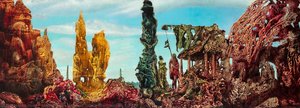
Fleur violette

Max Ernst's 'Fleur violette' is a captivating Dadaist painting featuring bold blue circles and vibrant yellow/red hues, reflecting the artist’s surreal exploration of form and color. Discover this unique artwork and bring its striking vision home.

Explorez le monde surréaliste de Max Ernst (1891-1976), pionnier du Dadaïsme et du Surréalisme ! Découvrez ses techniques innovantes de frottage, ses collages et ses peintures oniriques mettant en scène des oiseaux, des paysages et des thèmes psychologiques. #MaxErnst #Surréalisme #Dada

Giclée / Impression d'art

Impression giclée ou sur toile de qualité musée, avec une production rapide et des finitions au choix.

P118B $10
P118H $10
P118W $10
P438Z $10
P508JH $12
P508YH $12
P805H $10
P805Z $10
P919BZ $10
P919G $10
P919XJ $10
P959ZH $10
P968JZ $12
W106C $8
W218G $10
W218JH $8
W218Y $10
W307PJ $10
W316G $10
W316PJ $8
W316Y $10
W398PJ $8
W4111J $10
W500HY $15
W500JH $15
W692G $12
W849H $8
W940BG $15
W953PJ $8

Standard
custom
CM
INCH

Choisissez parmi nos formats prédéfinis qui respectent les proportions originales de l’œuvre.

largeur
hauteur

Vous pouvez saisir vos propres dimensions pour vous adapter à un cadre ou à un espace spécifique. Si la taille sélectionnée ne correspond pas aux proportions de l'image originale, nous recadrerons l'œuvre ou étendrons l'image avec une bordure en miroir ou une couleur unie. Une maquette numérique vous sera envoyée pour approbation avant le début de la production.
Veuillez noter que l'aperçu à l'écran ne reflète pas le recadrage ou l'extension réelle. Seule la maquette montrera avec précision la composition finale.
Bien que des tailles personnalisées soient disponibles, nous vous recommandons de choisir une dimension dans la liste prédéfinie afin de préserver les proportions originales.

Livraison dans le monde entier () en 2 semaines au lieu des 4/5 semaines habituelles. (21 juillet)

why_choose_icon
Livraison express gratuite dans le monde entier
why_choose_icon
Toile de lin de haute qualité
why_choose_icon
Assurance transport complète
why_choose_icon
Garantie de remboursement des frais de douane
why_choose_icon
Garantie de fidélité des couleurs
why_choose_icon
Politique de retour de 60 jours (uniquement en cas de défaut)
why_choose_icon
Garantie de remboursement à 100%
why_choose_icon
Réduction sur les achats groupés

Prix total

-

reproduction

Fleur violette

Giclée / Impression d'art

Format de reproduction

-

Prix total final

-

En bref

  • Title: Fleur violette
  • Movement: Dadaism
  • Artistic style: Surreal
  • Medium: Oil
  • Notable elements: Bold colors, circles
  • Subject or theme: Abstract design

Description de l'œuvre

A Descent into Chromatic Discord: Unpacking Max Ernst’s “Fleur violette”

Max Ernst's "Fleur violette" presents a captivating enigma, a visual puzzle that immediately draws the viewer into its unsettling yet undeniably compelling world. This seemingly simple composition – a dominant blue circle punctuated by bursts of yellow and red – is far more than just an exercise in color; it’s a potent distillation of Dadaist principles, reflecting Ernst's profound skepticism towards reason and his exploration of the subconscious mind. The painting’s raw energy and deliberate disruption of traditional artistic conventions speak to a period of intense social and political upheaval, mirroring the anxieties and uncertainties that defined the early 20th century.

  • Subject Matter: While ostensibly depicting a flower – “fleur” in French – the work transcends any literal representation. The blue circle acts as an anchor, a void perhaps, while the vibrant colors suggest a chaotic bloom, a distorted and unsettling natural form.
  • Style & Technique: Executed in oil on canvas, "Fleur violette" embodies Ernst’s signature approach to painting. He employed techniques borrowed from various sources – including collage, frottage (rubbing), and decalcomania – layering textures and creating a sense of visual friction. The deliberate roughness of the paint application contributes to the work's unsettling atmosphere.
  • Dadaist Roots: As a key figure in the Dada movement, Ernst rejected academic art traditions and embraced irrationality, chance, and anti-art sentiments. “Fleur violette” perfectly embodies this ethos, challenging viewers to confront their own preconceptions about beauty and representation.

Decoding the Symbolism: A Journey into the Unconscious

The specific colors employed in "Fleur violette" are laden with symbolic weight. Blue, often associated with melancholy, spirituality, and the infinite, dominates the composition, creating a sense of isolation or perhaps even dread. The jarring bursts of yellow – representing energy, intellect, and sometimes deceit – clash violently with the blue, while red evokes passion, danger, and primal instincts. These colors aren’t blended harmoniously; they are deliberately juxtaposed to create visual tension and disrupt any attempt at rational interpretation.

  • The Circle: The central circle can be interpreted as a symbol of wholeness or containment, but within the context of the painting, it feels more like an empty space, a void that demands attention.
  • Color Dynamics: Ernst’s use of color is not merely decorative; it's a deliberate attempt to evoke emotional responses and tap into the viewer’s subconscious. The colors seem to vibrate with an internal energy, reflecting the artist’s own psychological turmoil.

Historical Context & Max Ernst’s Vision

Created during a period of immense social and political change – marked by World War I and the rise of Dadaism – “Fleur violette” reflects Ernst's disillusionment with Western civilization. Born in 1891, Ernst witnessed firsthand the horrors of war and the breakdown of traditional values. His artistic practice became a means of expressing his anxieties and challenging the status quo. Ernst’s intellectual background, encompassing philosophy, psychology, and psychiatry, profoundly shaped his work, leading him to explore themes of dreams, memory, and the irrational.

  • Early 20th Century Influences: The painting resonates with the broader artistic currents of the time, including Expressionism and Surrealism, reflecting Ernst’s ongoing experimentation with different styles.
  • A Rejection of Representation: “Fleur violette” exemplifies Ernst's commitment to rejecting traditional representational art in favor of exploring subjective experience and psychological states.

Emotional Impact & Artistic Value

"Fleur violette" is a powerfully evocative work that continues to fascinate and challenge viewers today. Its unsettling composition, bold use of color, and Dadaist sensibilities create an atmosphere of unease and disorientation. This reproduction captures the essence of Ernst’s artistic vision, offering a tangible connection to one of the most important figures in 20th-century art. It's a piece that invites contemplation, prompting viewers to question their perceptions of reality and explore the depths of the human psyche.

Biographie de l'artiste

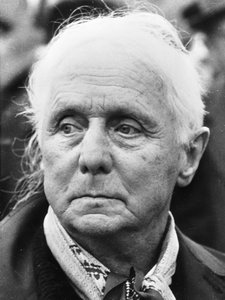
Max Ernst : Une Vie au Sein du Surréalisme

Jeunesse et Éducation

  • Né le: 1er avril 1891 à Brühl, en Allemagne.
  • Le père d'Ernst, Philipp Ernst, était enseignant des sourds et peintre amateur, encourageant ainsi l'intérêt précoce de Max pour l'art.
  • Il a étudié la philosophie, l'histoire de l'art, la littérature, la psychologie et la psychiatrie à l'Université de Bonn de 1909.
  • Ce parcours académique diversifié a profondément influencé ses explorations artistiques ultérieures.

Développement Artistique & Influences

  • Un moment décisif fut l'exposition Sonderbund à Cologne (1912), où il a découvert des œuvres de Pablo Picasso, Vincent van Gogh, et Paul Gauguin.
  • En 1914, il a rencontré Hans Arp, débutant une amitié qui a durablement façonné son parcours artistique.
  • La Première Guerre mondiale a profondément marqué Ernst ; ses expériences de soldat ont conduit à la déception et à une vision critique de la société.
  • Il s'est inspiré des écrits de Sigmund Freud, explorant les thèmes de l'inconscient dans son art.

Dadisme & Surréalisme

  • Ernst est devenu une figure clé du groupe Dadiste de Cologne après la Première Guerre mondiale, rejetant les conventions artistiques traditionnelles.
  • Il a pionné des techniques innovantes telles que frottage (frotter un crayon sur des surfaces texturées) et grattage (gratter la peinture pour révéler les couches sous-jacentes).
  • Dans les années 1920, il a rejoint le mouvement surréaliste à Paris, collaborant avec des artistes tels que Paul Éluard.
  • Son œuvre de cette période explorait des images oniriques et des thèmes psychologiques.

Œuvres Majeures & Techniques

  • Frottage : Une technique utilisée pour créer des textures et des images inattendues, exemplifiée dans de nombreuses œuvres.
  • Collage : Ernst a fréquemment utilisé le collage, combinant des éléments disparates pour créer des compositions surréalistes.
  • Œuvres Notables :
    • La Ville Entière
    • Euclides
    • De Ceci, Personne Ne Devrait Savoir
    • Forêt et Colombe
  • Ses peintures présentent souvent des images symboliques, notamment les oiseaux (en particulier son alter ego Loplop), les paysages et des juxtapositions troublantes.

Vie Tardive & Héritage

  • Ernst s'est installé aux États-Unis pendant la Seconde Guerre mondiale, continuant à peindre et à expérimenter de nouvelles techniques.
  • Il est revenu en France après la guerre et est resté actif jusqu'à sa mort le 1er avril 1976 à Paris.
  • Signification Historique : Les contributions d'Ernst au Dadisme et au Surréalisme ont été révolutionnaires. Il a défié les normes artistiques, exploré l’esprit inconscient et inventé des techniques innovantes qui continuent d’inspirer les artistes aujourd’hui.
  • Il reste l'un des figures les plus importantes et influentes de l'art du 20e siècle.
Max Ernst

Max Ernst

1891 - 1976 , Allemagne

En bref

  • Artistes Influents:
    • Pablo Picasso
    • Vincent van Gogh
    • Paul Gauguin
  • Date De Décès: 1er avril 1976
  • Date De Naissance: 1er avril 1891
  • Lieu De Naissance: Brühl, Allemagne
  • Mouvement Artistique: Dadaïsme et Surréalisme
  • Nationalité: Allemand/Américain/Français
  • Nom Complet: Max Ernst
  • Œuvres Notables:
    • La Ville Entière
    • Euclides
    • Forêt et Colombe
Explorez des œuvres d'art classées par thèmes, styles et caractéristiques.